
Rabbit Hole: Minimum L-seams

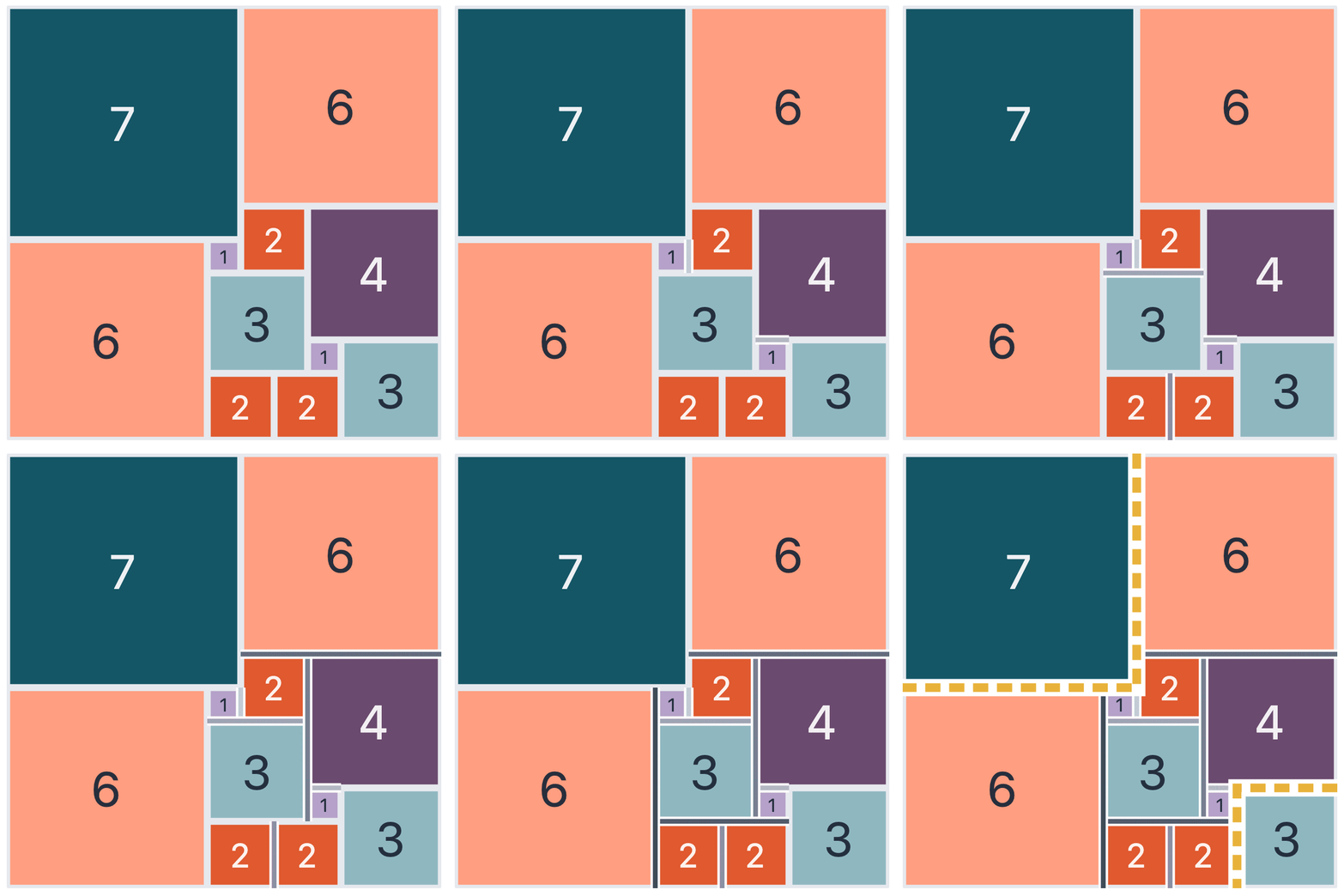
I was trying to write a post about art with squarable numbers, and so I thought quilting a Mrs. Perkins Quilt might be a nice addition to the exploration. With 1500 words almost ready to hit send, I ended up down a rabbit hole. This post is rather long and has a lot of data, so bear with me, or skip it. I will have an artsy post with a quilt in the next week.
The quilt:
Ok, first off, Mrs Perkin's quilt is a lovely math problem. The challenge is to slice a square of side n into smaller squares with integer side lengths, use the fewest squares possible, and make sure the side lengths share no common factor.
The website squaring.net has a lot more on the problem, including the original wording, and Wolfram has a demonstration to explore.
"For Christmas, Mrs. Potipher Perkins received a very pretty patchwork quilt constructed of 169 square pieces of silk material. The puzzle is to find the smallest number of square portions of which the quilt could be composed and show how they might be joined together. Or, to put it the reverse way, divide the quilt into as few square portions as possible by merely cutting the stitches."
Henry E. Dudeney
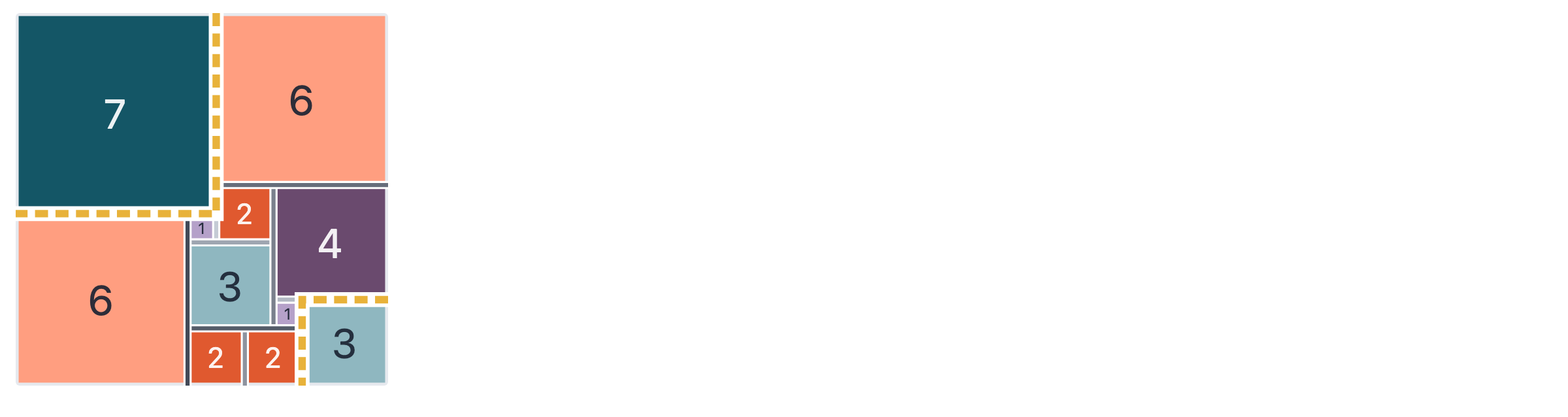
The solution looks like this:
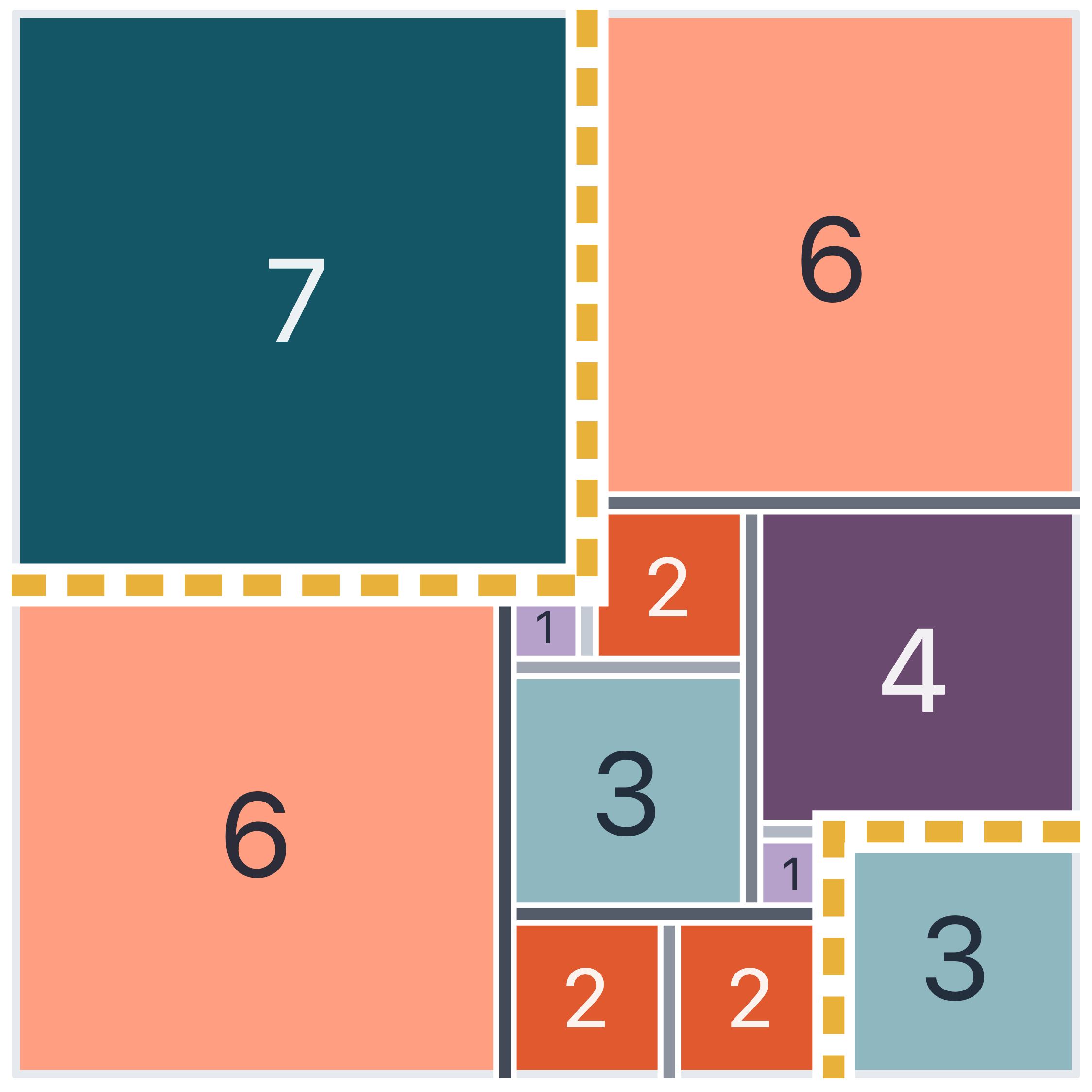
As I write this post, I have fabric at the ready to quilt this; but I have instead found myself going through many quilts to assess sewing technique. You see, I can't seem to find images of people sewing these quilts despite their name. It might be because they are a little tricky. I don't like sewing around corners - they can pucker (you might need to use a partial-seam trick). For this quilt, I will have to sew two L-shaped seams (shown in yellow dashes above).
This got me thinking: for any Mrs. Perkin's Quilt optimal quilt of side n, what is the minimum number of L-seams required? And this is where we start building a sequence a(n):
{ 0, 0, 0, 0, 0, 1, 0, 1, 0, 1, 1, 2, 1, 1, 2, 2, ... }
Below is the exploration for n values from 2 to 17. I started looking at the larger numbers, but there can be a lot of quilts, and I honestly want to get sewing on this 13x13 and maybe a couple of others. Below is just data, then references. Some questions were also pondered, but not answered:
- What quilt will require 3? 4?
- What is the distribution of lazy quilts vs. harder quilts for each n as it gets larger?
- Will two L-seams ever be needed in a row (like a U-seam)?
- What other sequences can spin off of this one?
- Is it worthy of being an OEIS sequence, or is it too niche? (I called a fellow puzzler and colleague for this one in my uncertainty)
Data:
a(2) = 0

a(3) = 0
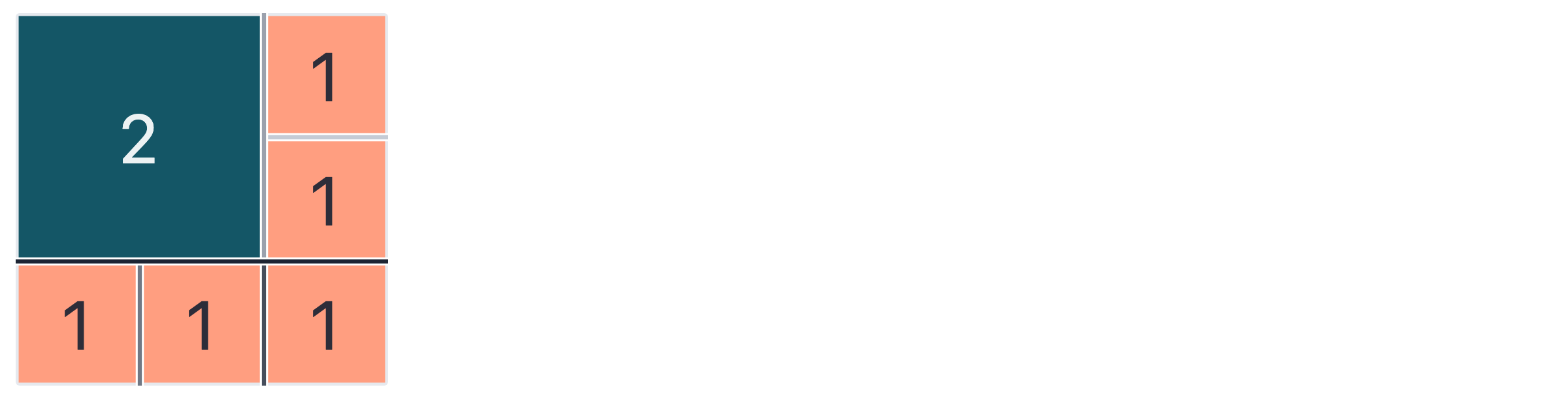
a(4) = 0
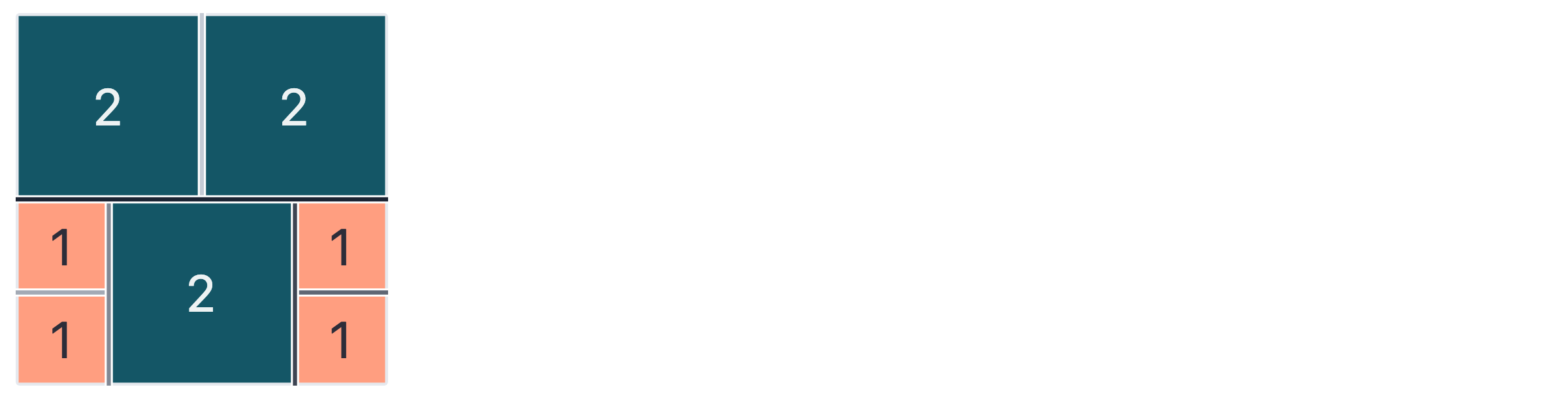
a(5) = 0
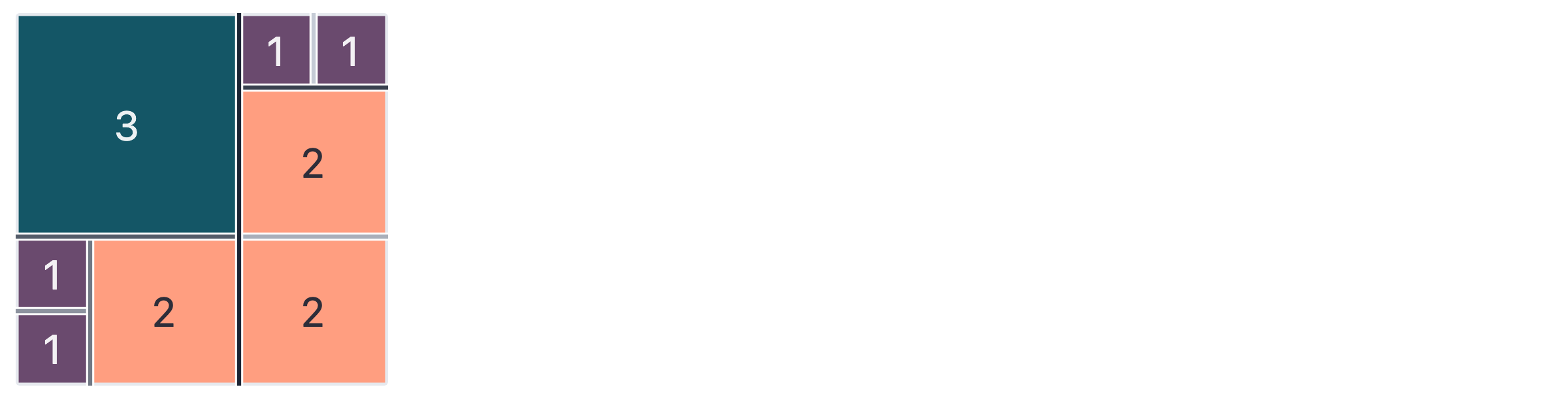
a(6) = 0
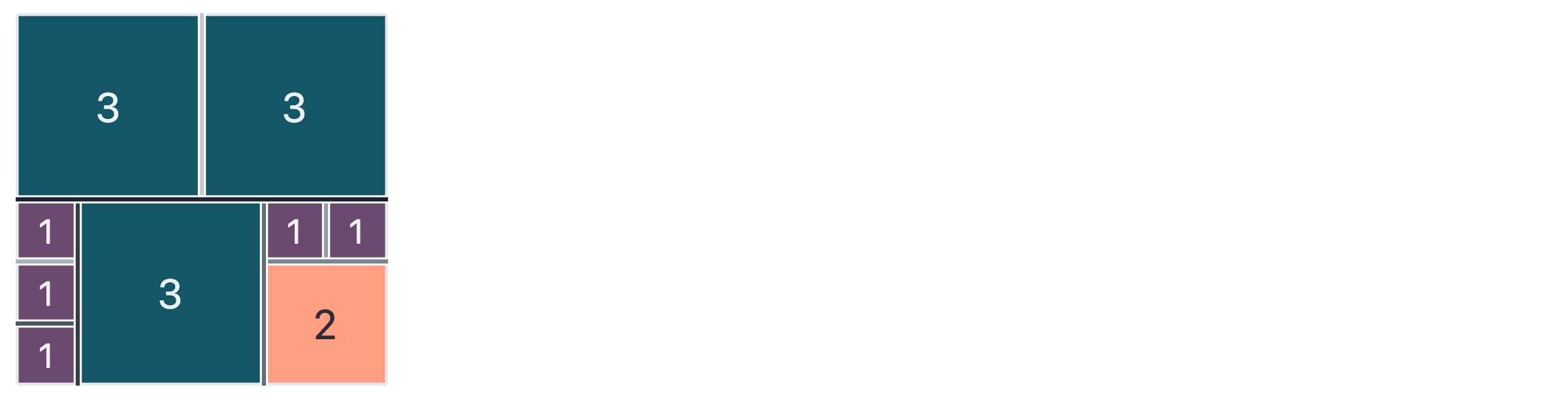
a(7) = 1
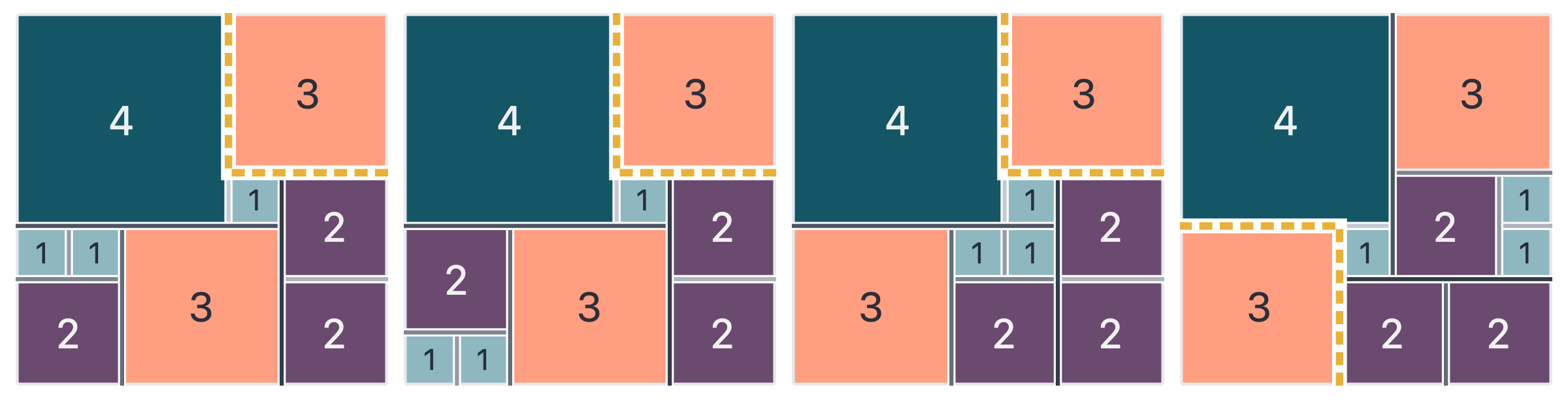
a(8) = 0
28 quilts ( 26 need 0, 2 need 1) (only one zero is shown)
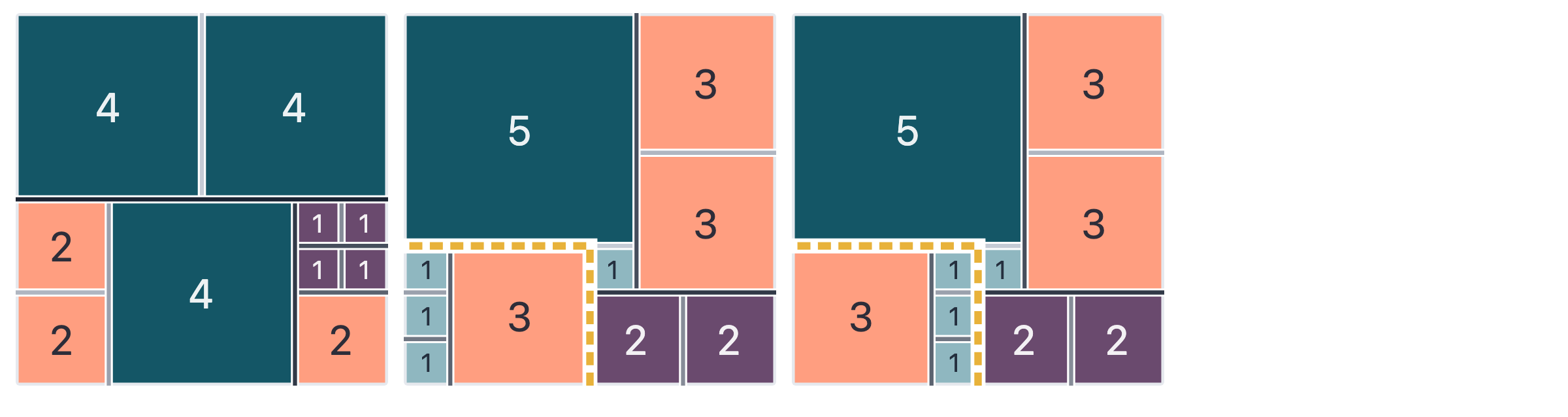
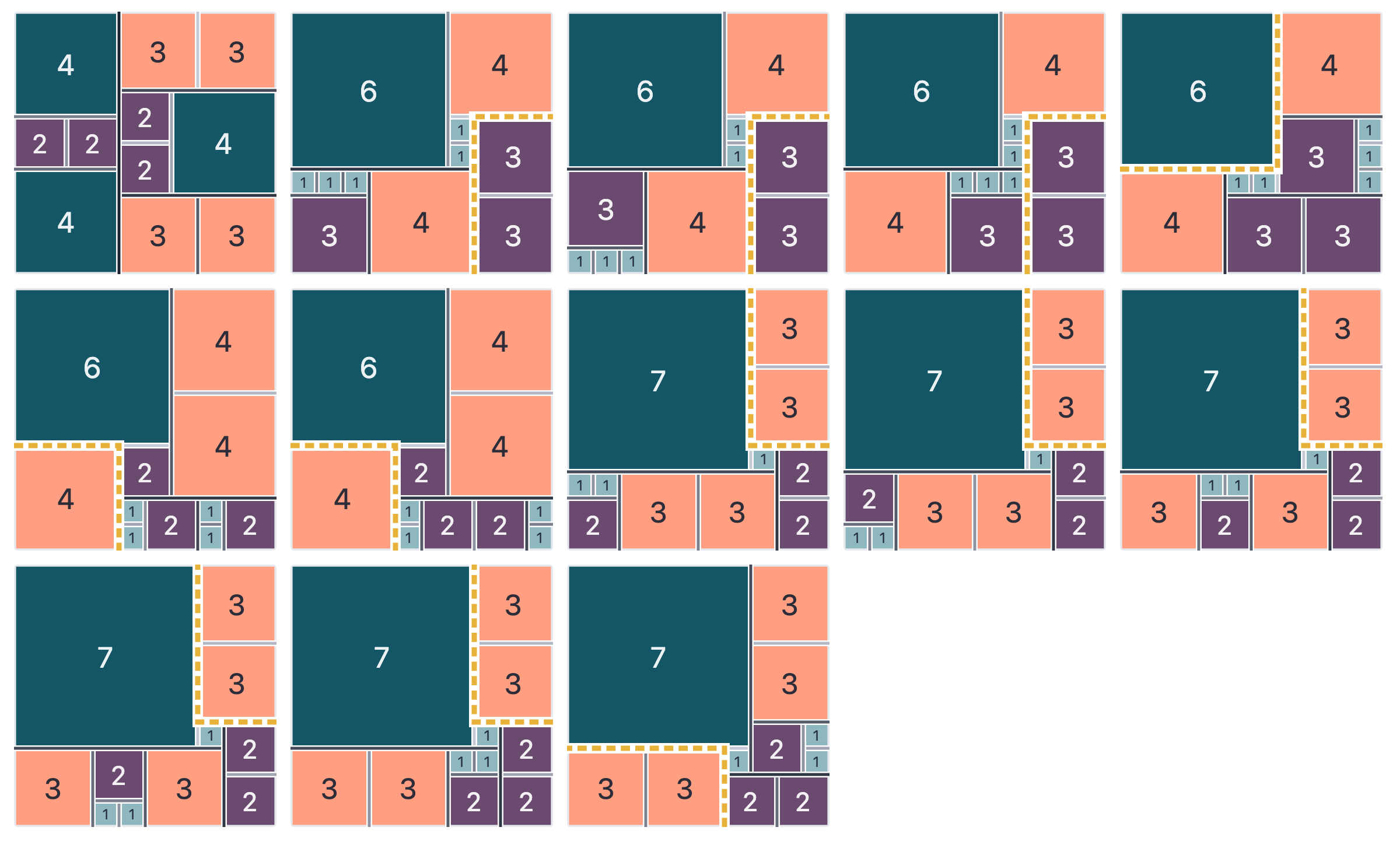
a(9) = 1
a(10) = 0
75 quilts ( 63 need 0, 12 need 1) (only one zero is shown)
a(11) = 1
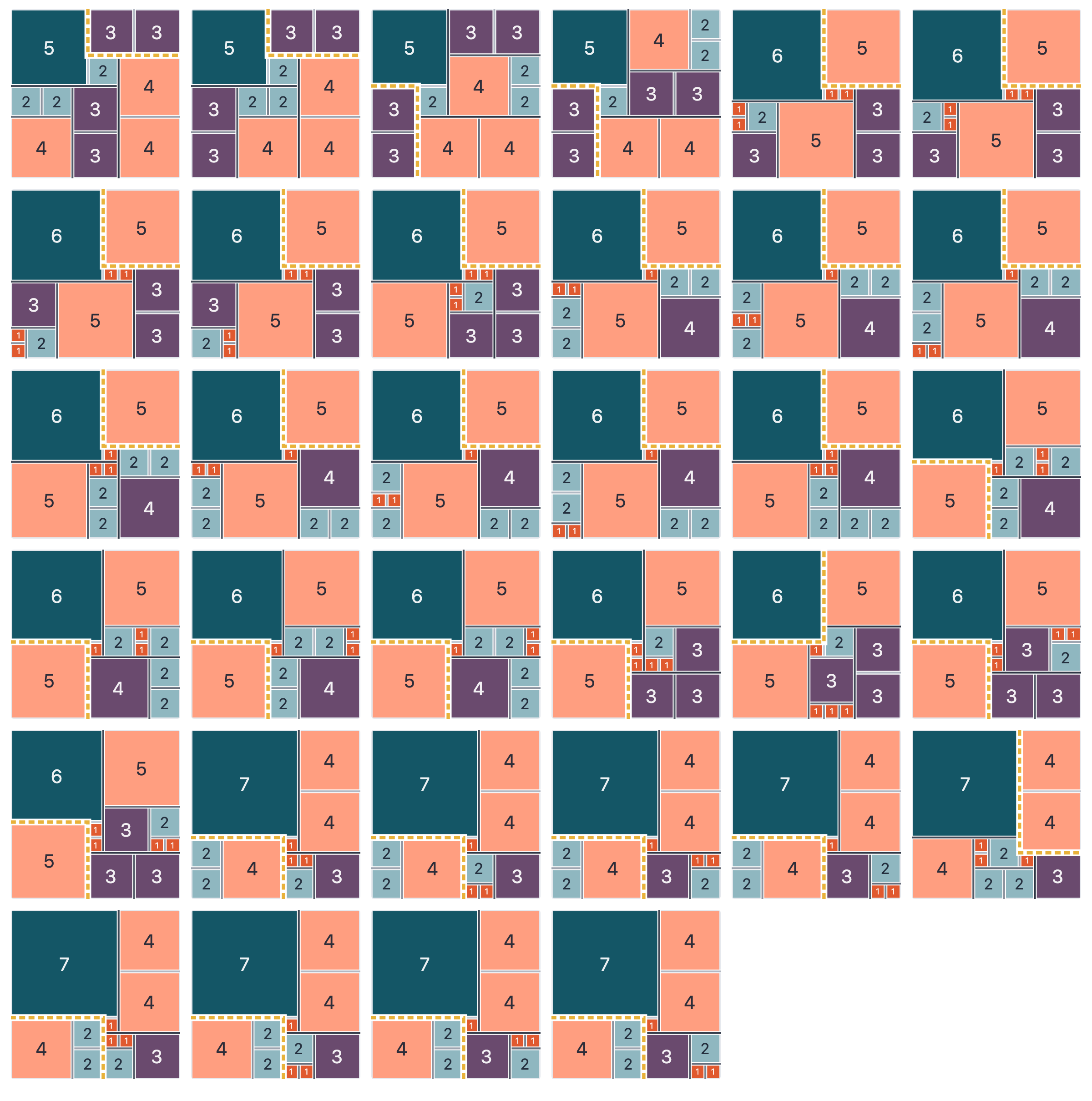
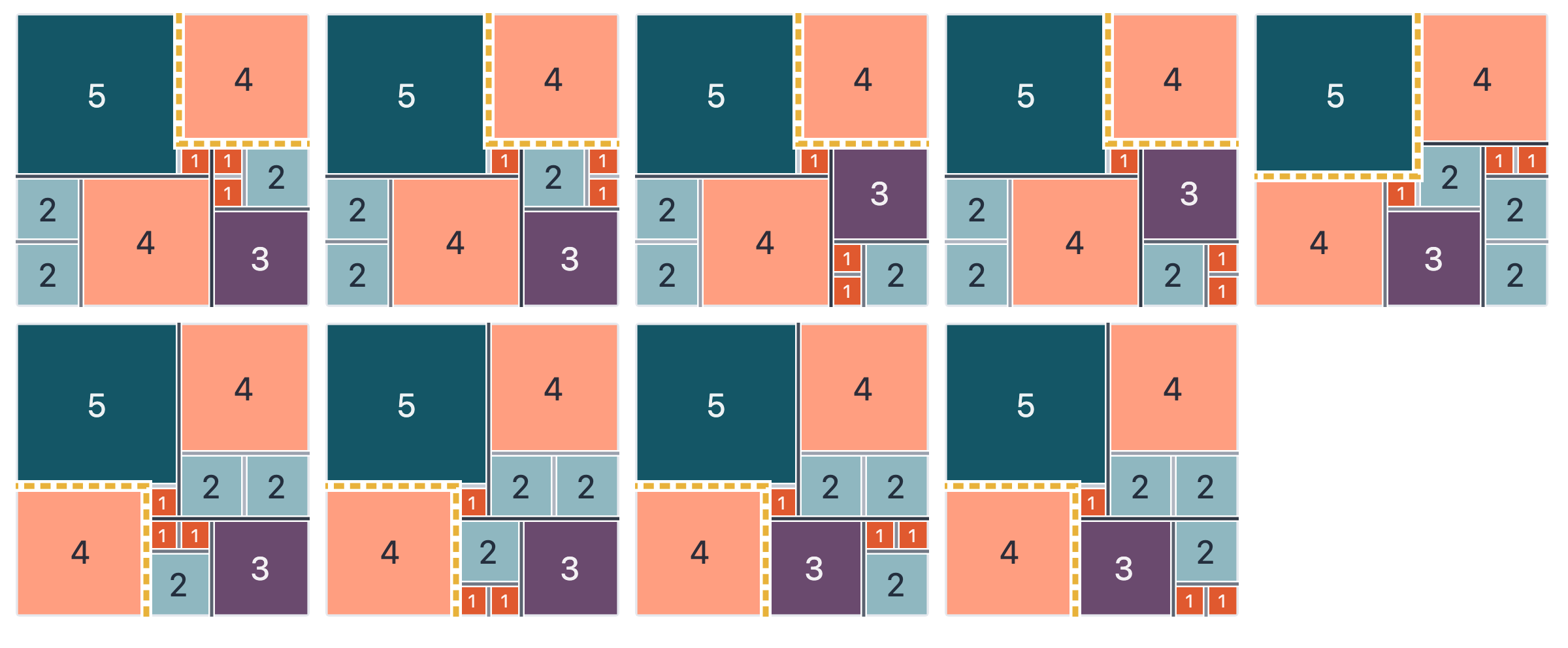
a(12) = 1
9 quilts (8 need 1, 1 needs 2)
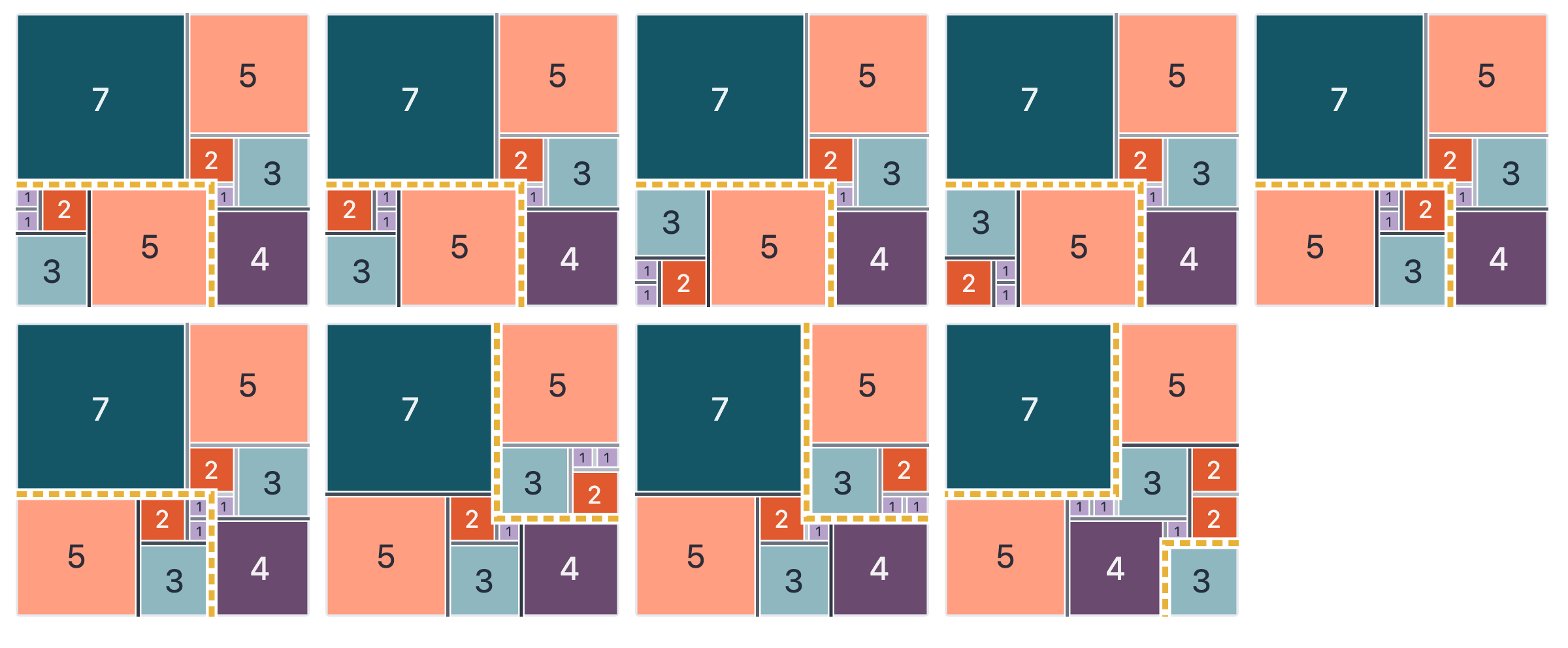
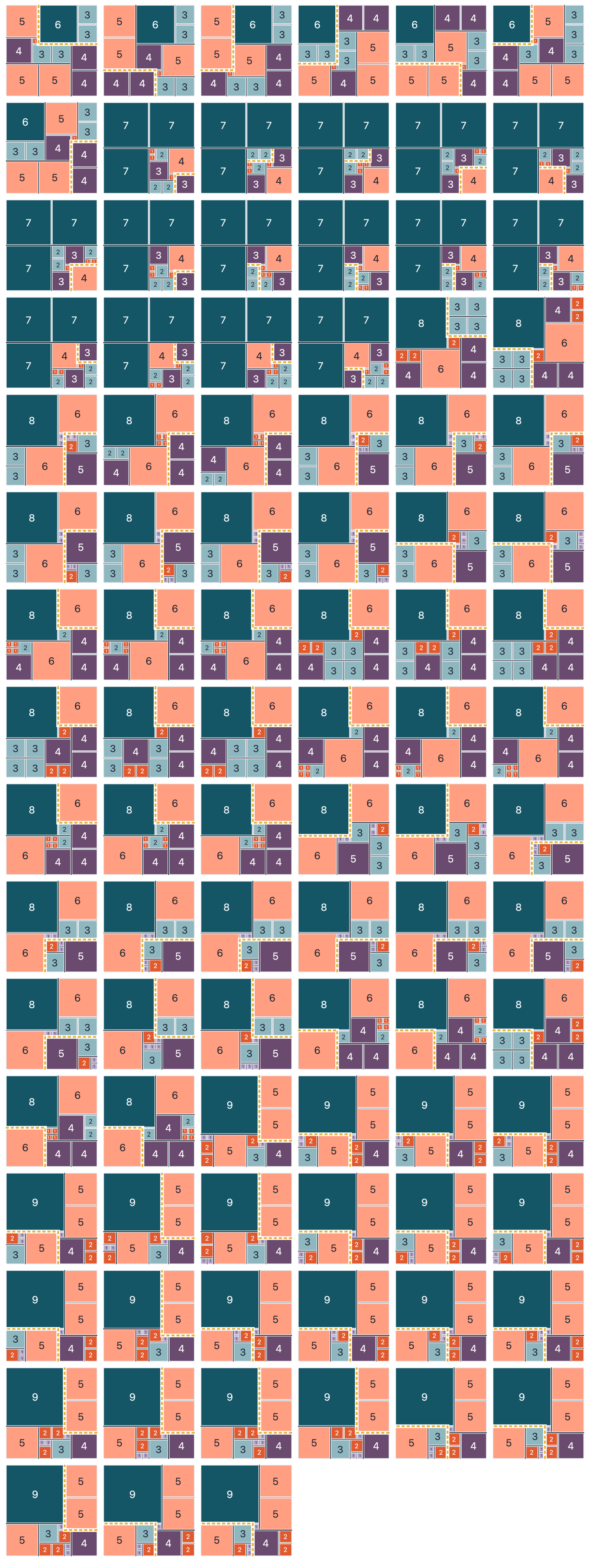
a(13) = 2
a(14) = 1
a(15) = 1
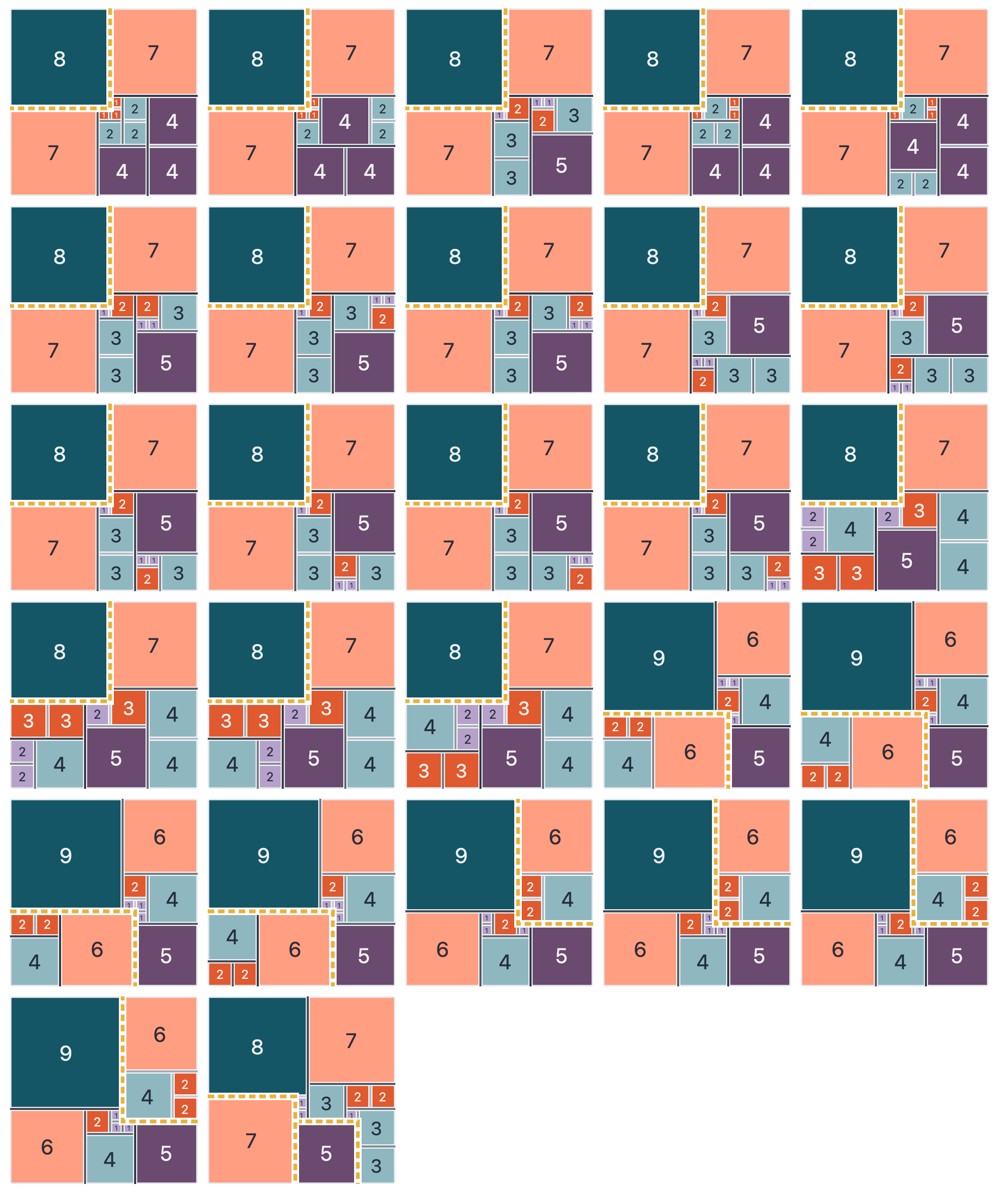
a(16) = 2
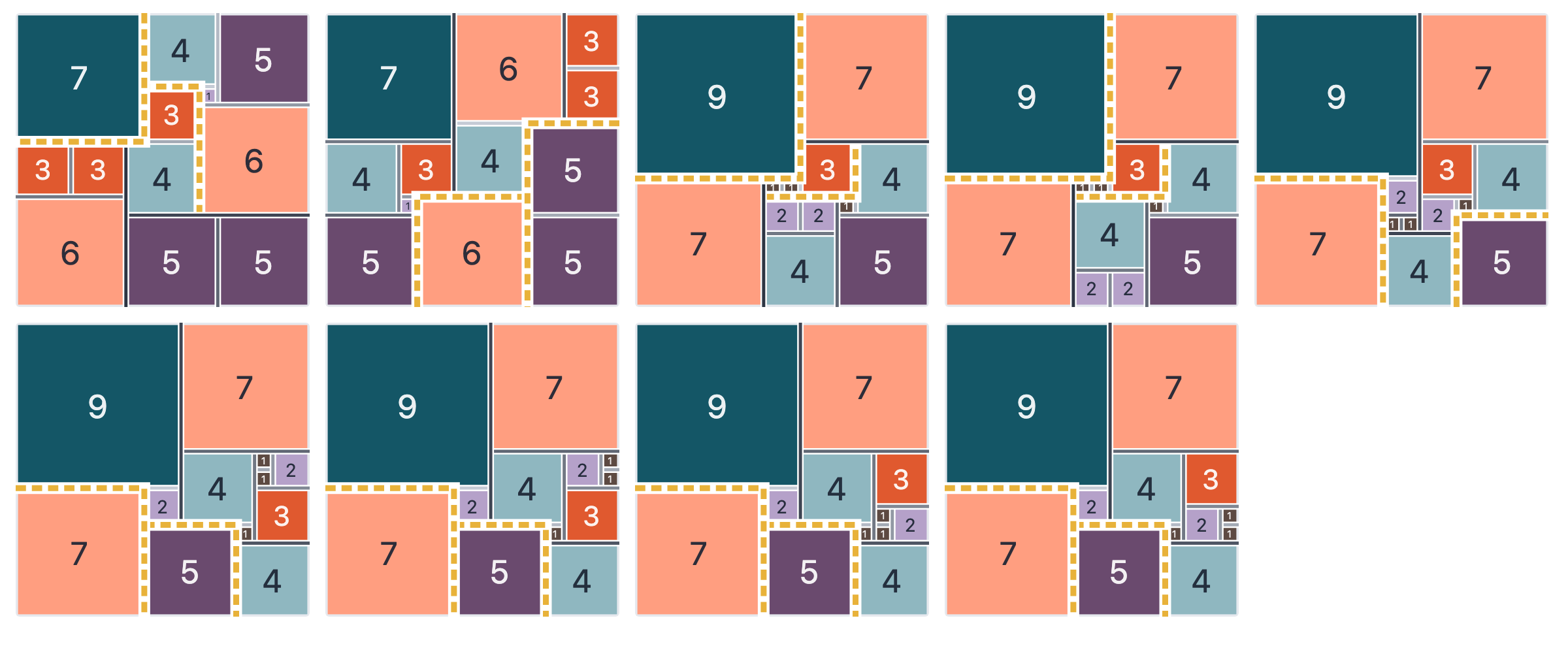
a(17) = 2
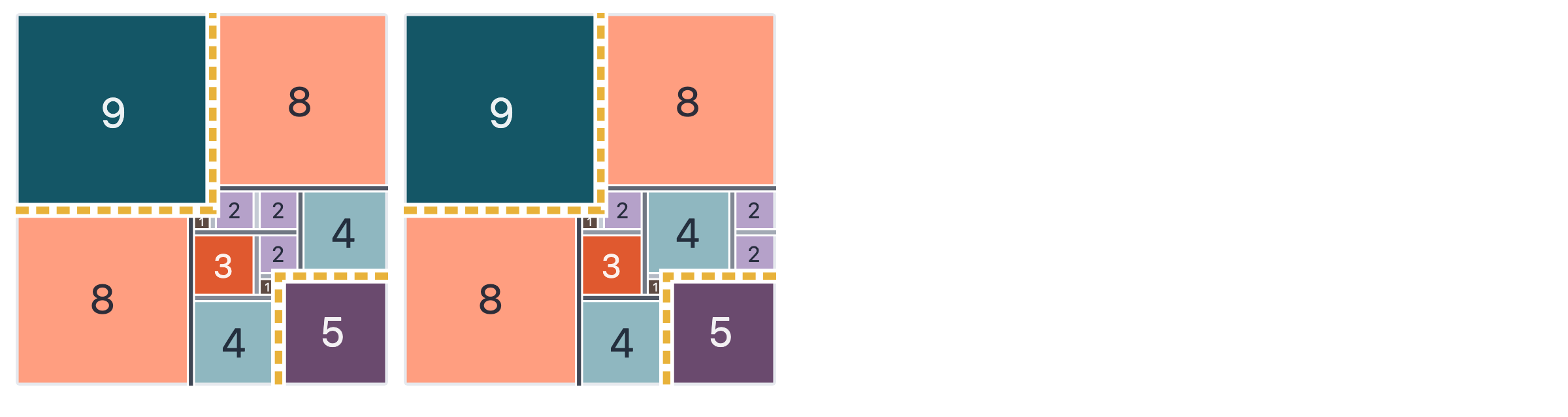
References
- Data used: Stuart E. Anderson, "Mrs. Perkin's Quilt," Squaring.net — quilt data computed and compiled by Ed Pegg Jr, Stuart Anderson, James Williams, Lorenz Milla, Ed Wynn, Richard Guy, and others.
- Henry Ernest Dudeney, "Mrs. Perkins's Quilt," Problem 173 in Amusements in Mathematics, Nelson, London, 1917 (reprinted by Dover; free text at Project Gutenberg).
- Eric W. Weisstein, "Mrs. Perkins's Quilt," MathWorld — A Wolfram Resource.
- "Squaring the square," Wikipedia.
- Ed Pegg Jr, "Math Games: Square Packing," MAA Online, December 1, 2003.
- Ed Wynn, "Exhaustive generation of 'Mrs Perkins's quilt' square dissections for low orders," arXiv:1308.5420 [math.CO], 2013–2014.
- OEIS A005670: Mrs. Perkins's quilt — smallest coprime dissection of an n × n square.
- TBD - maybe a new OEIS sequence?? I have a draft in the works.