
Artsy Math: Hailstone Arabesques

This is the first in a series posts that blend art and math. Jump in and choose your medium to indulge in creative expression.
Note: This post was renamed, to better define the series of posts.
Warm-up
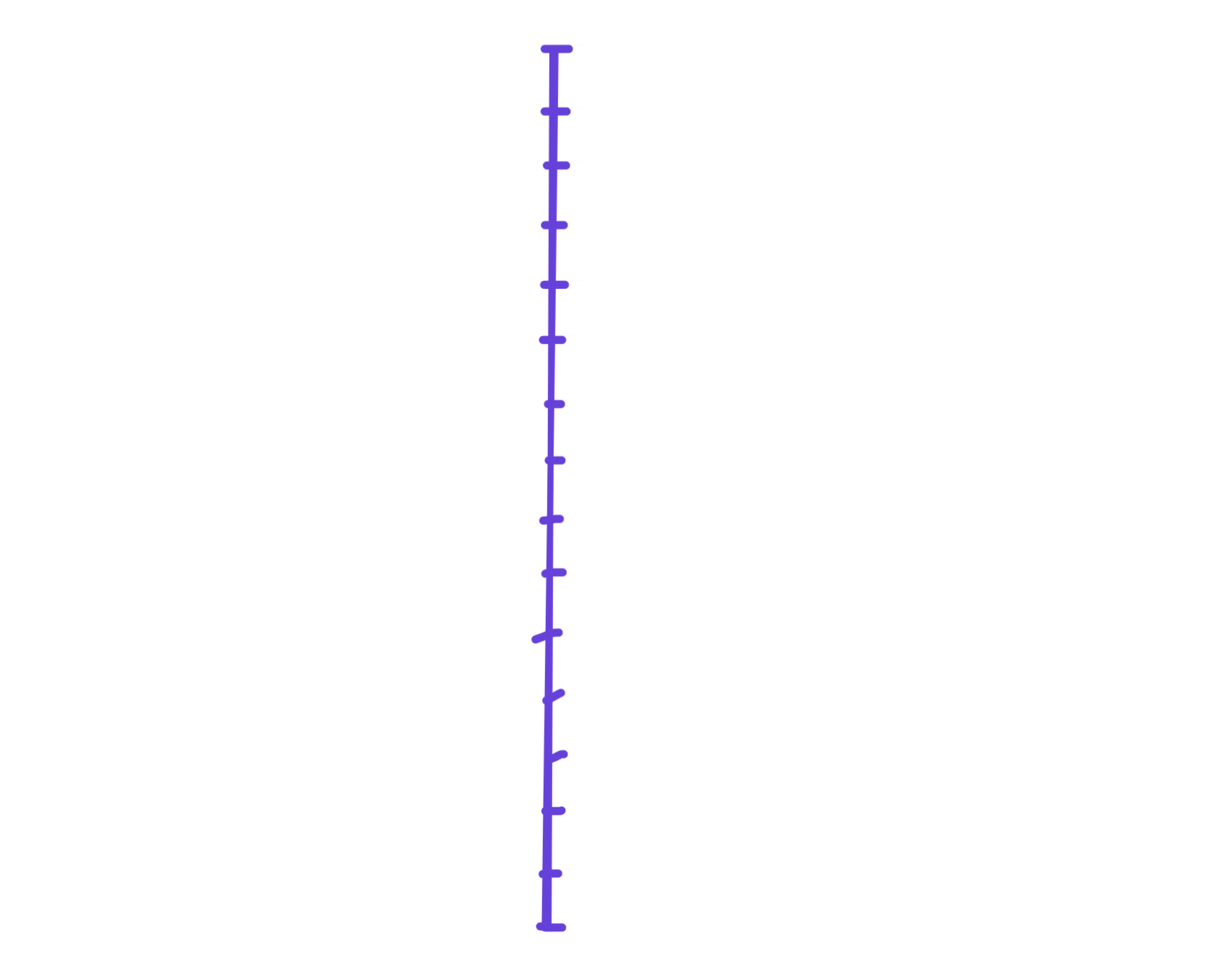
Grab a sheet of paper and a ruler. Make a line with 16 marks evenly spaced from the top to the bottom of the page.
Next, let's define two rules to build a sequence together.
- If a number is even, divide by 2
- If a number is odd, multiply by 3 and add 1
Let's start with 6.
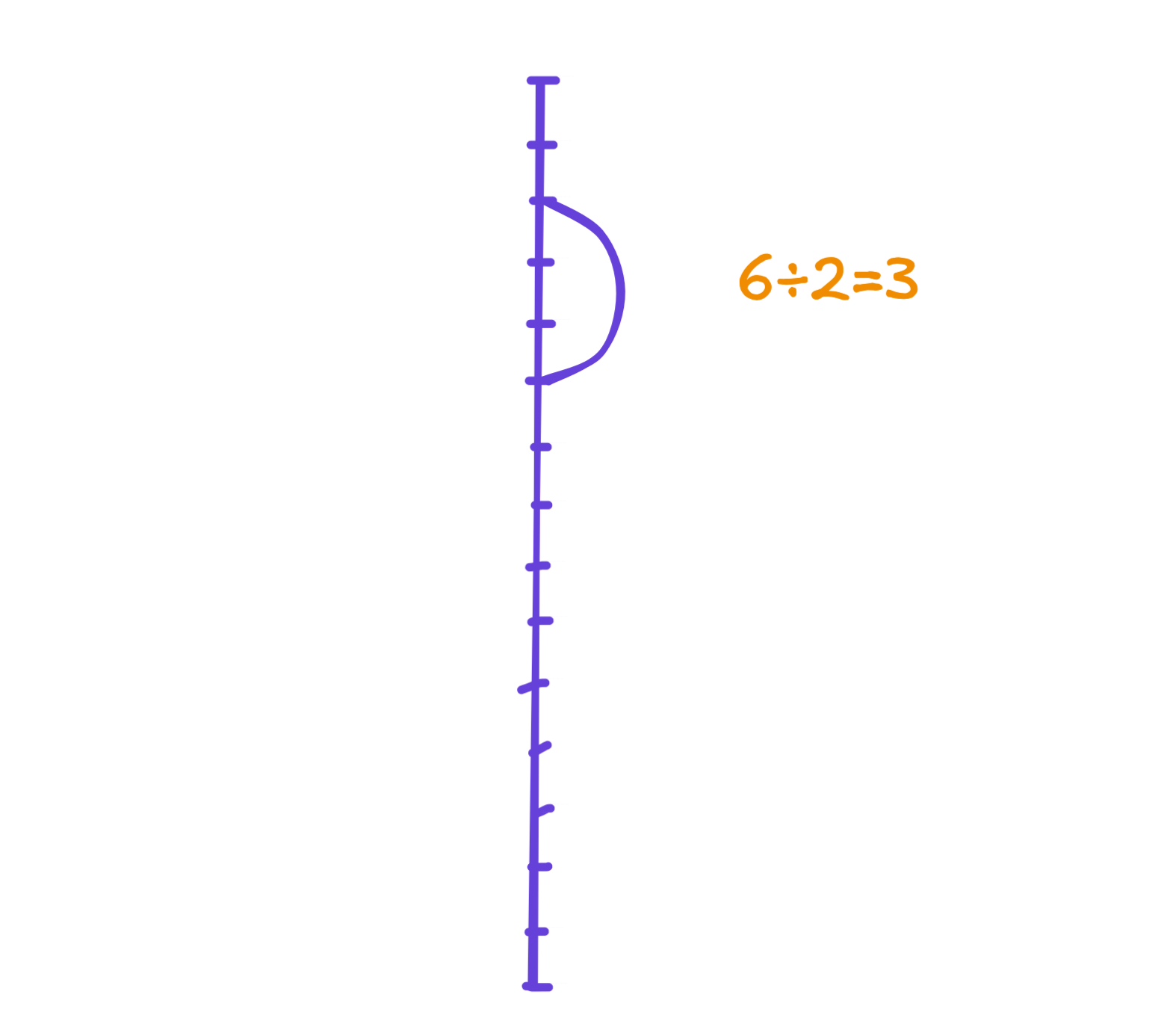
It is even, so 6 divided by 2 is 3. Connect the 6th mark to the 3rd mark with a curve on your line:
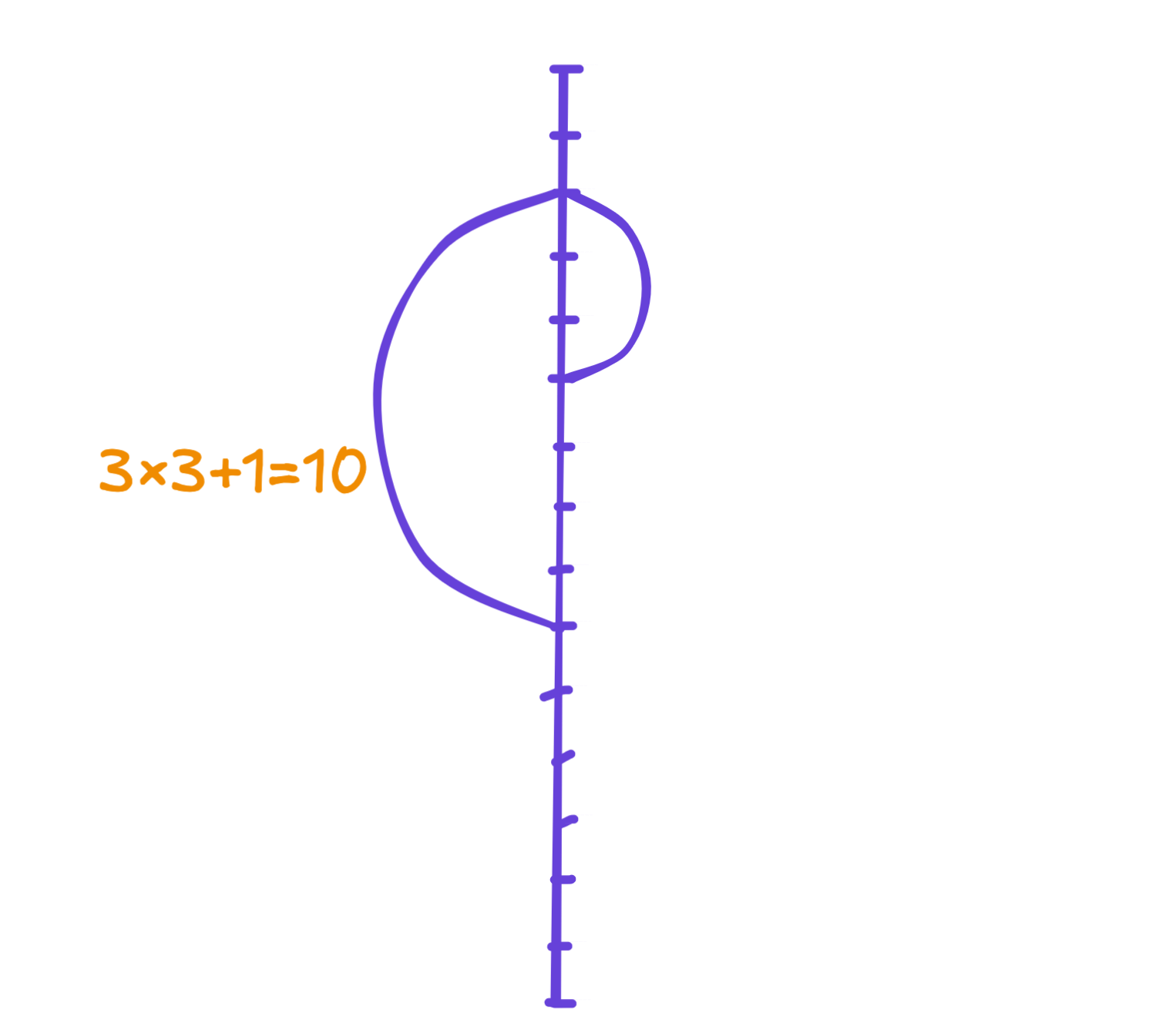
Now we have 3, which is odd. Going back to our rules, we need to multiply by 3 and add 1. That results in 10. Go ahead and connect the 3 to the 10:
Repeat this process using even/odd rules until you get a 1. Draw a connection each time.
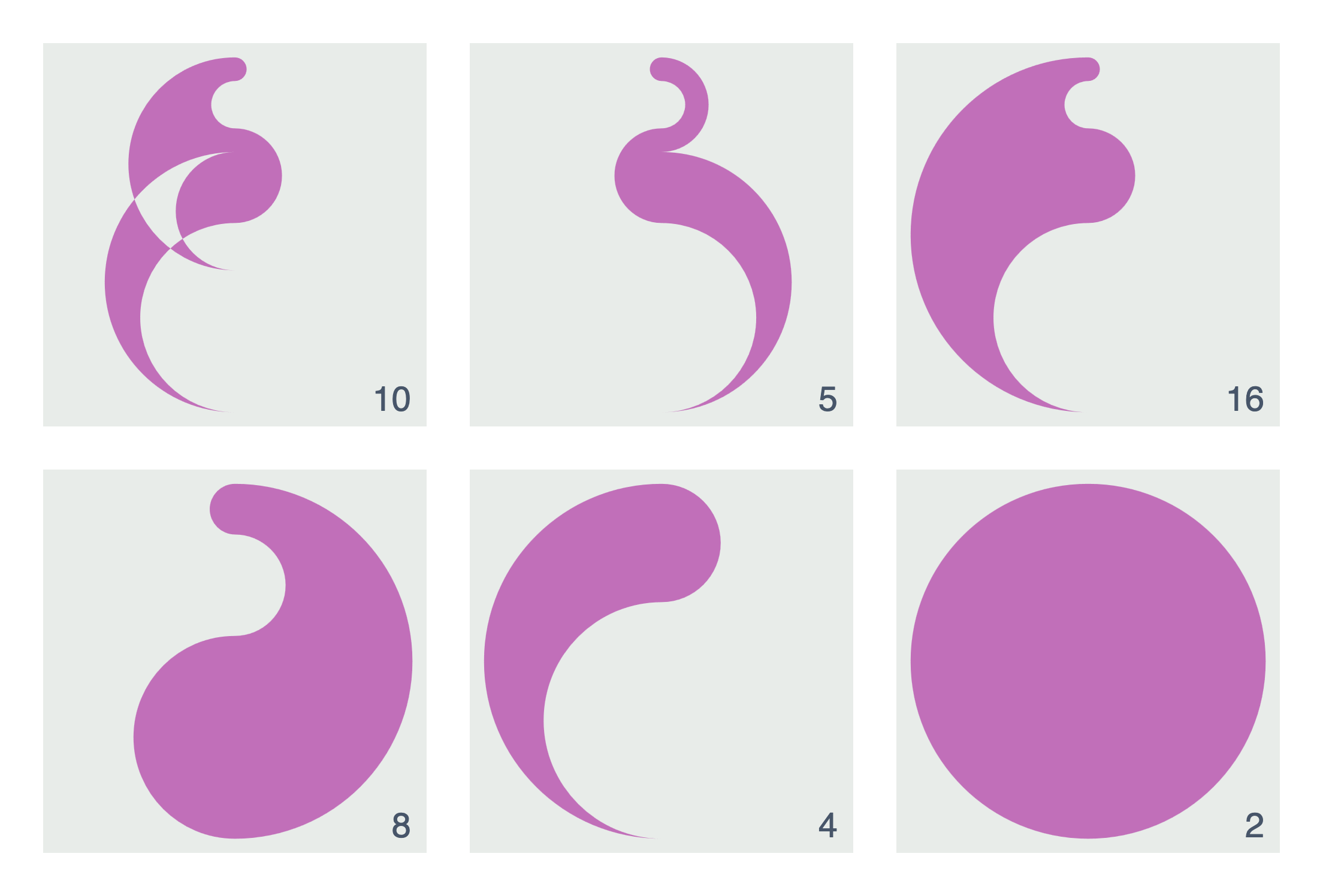
sequence: {6, 3, 10, 5, 16, 8, 4, 2, 1}
Here is one example (you can decide how you connect yours).
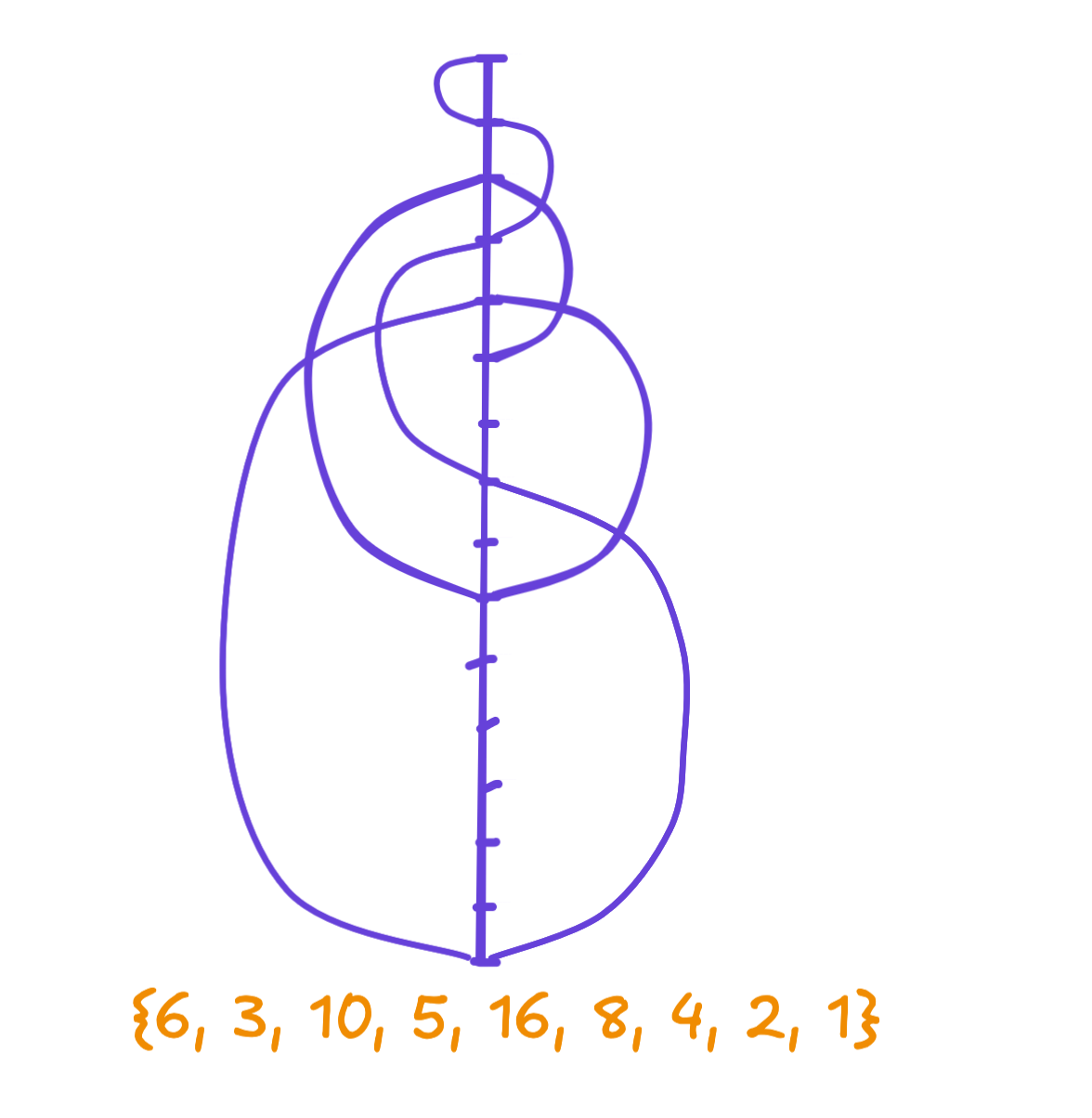
Hailstone Numbers
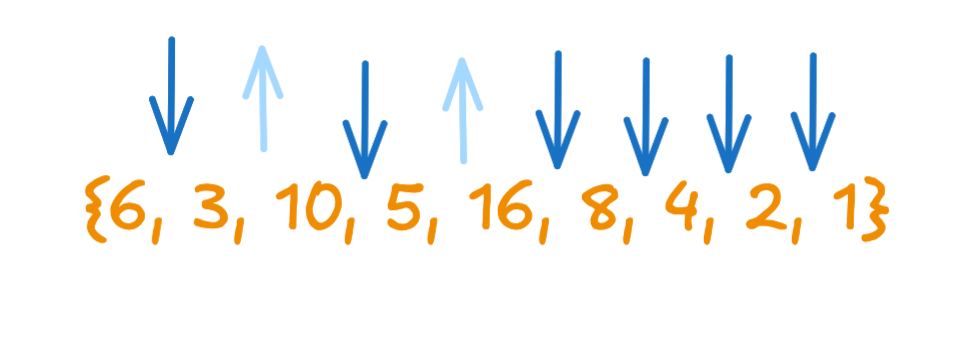
Hailstones form by rising and falling through the sky. With the ups and downs, the water accumulates and forms these little balls of ice.
The pattern of numbers we used above did just that. They decrease (go down) or increase (go up) over and over again:
Activity
Now, apply the same rules to a number other than 6 and build a new sequence. Some numbers might make a large sequence – play around to find one you like. Maybe start with one of the following: 3, 5, 12, 20, or 32.
Remember the rules:
- Even: n/2
- Odd: 3n + 1.
Create a doodle or sketch of the hailstone path.
- Play with how you draw the connections between the values (you could try triangles, arcs, circles, dashes)
- Play with the shape of the number line - maybe curve the line.
- Play with which side of the number line you draw the connection
- Play with connecting the starting and stopping points as a closed shape
- Color, shade, or paint your creations
Do this for a handful of numbers to build a small collection. Here is an example of the path for 3 drawn 3 different ways where 3 gives {3,10,5,16,8,4,2,1}.
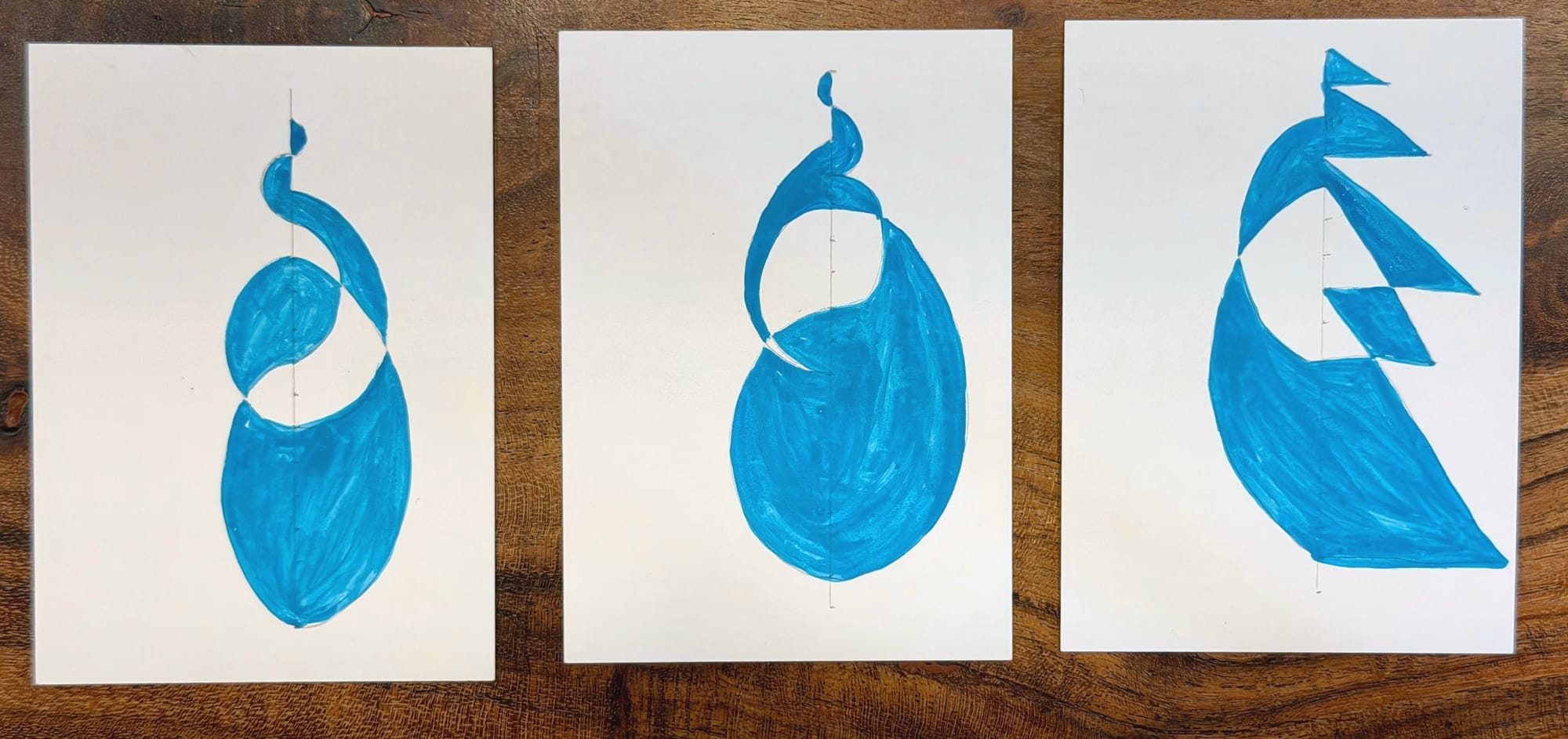
The possibilities are endless! You can get silly and make a hailstone creature:

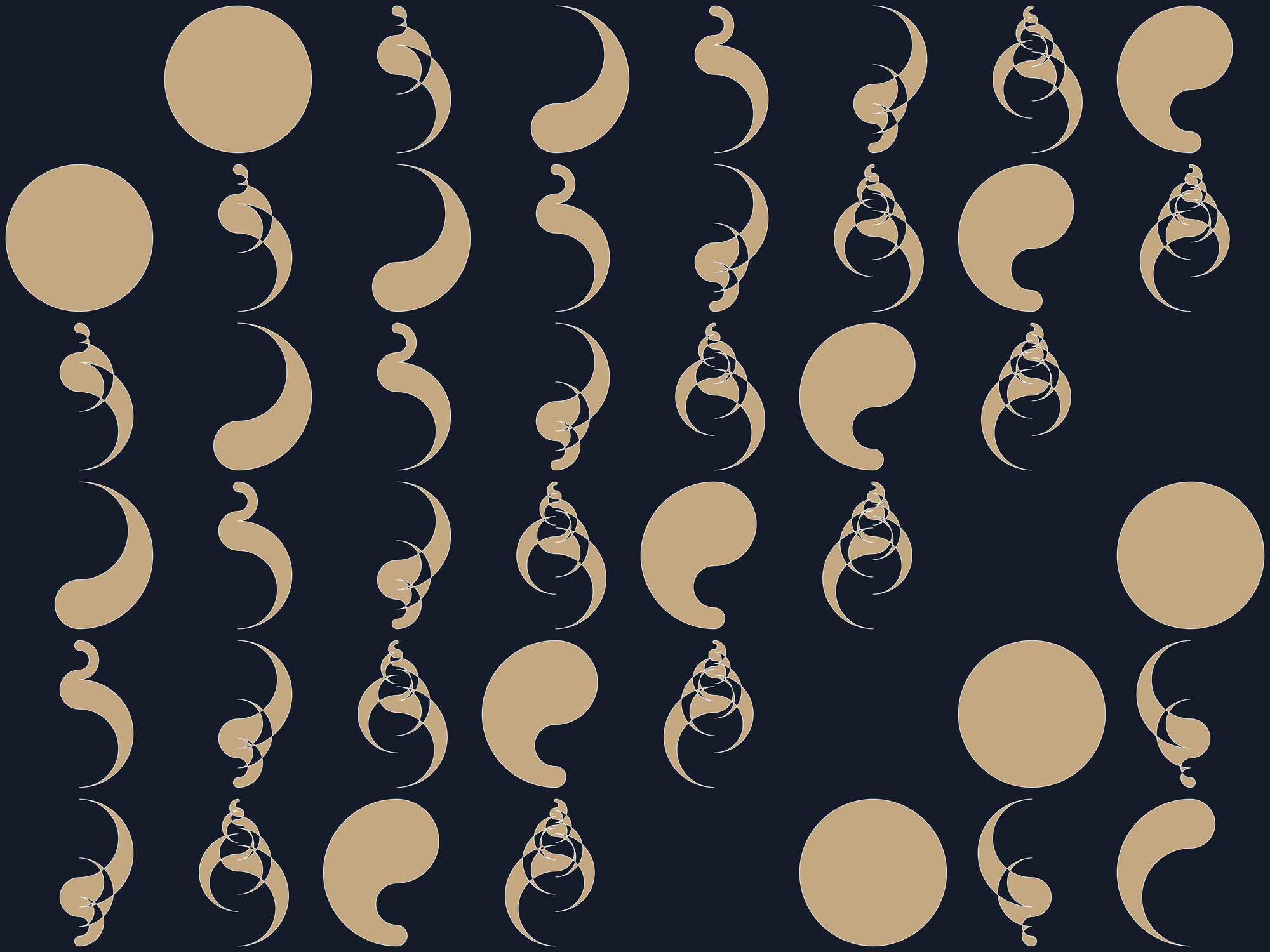
Collage, watercolor, music, quilting, and so many other mediums are ways to explore. I called the post arabesques because if you use a compass, you might find such designs.
Diving Deeper:
As you create, you may find yourself noticing patterns and asking questions. Here are some examples of questions or ways to dive deeper:
- What happens after 1 if you keep going with these rules?
- Do all numbers act like hailstones and go up and down?
- Do all numbers reach 1?
- How many steps do numbers take to get to 1? Is there a pattern or underlying structure to that?
- What happens if you change the rule to 5n+1? Or 3n−1?
- Run the rule backwards from 1. What kind of tree grows?
- Do some of the shapes the sequences make have similarities?
- If you were to collect them into groups, which ones would go together?
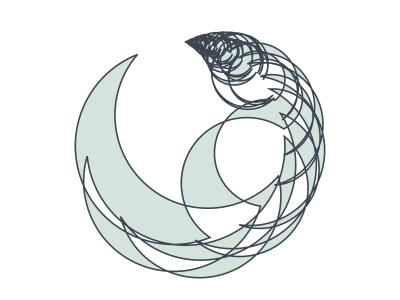
Paper and paint are wonderful, but sometimes we want to look at dozens, hundreds, or even thousands of numbers so we can better understand patterns or seek answers. Here is a tool to look through and play with these numbers to make more art:

Other resources:
- Hailstone Numbers
- Desmos Example
- Numberphile on Collatz
- Online Encyclopedia of Integer Sequences:
- Collatz Conjecture
Note: much in math has many names. I chose to use Hailstone Numbers in this post because it describes the behavior of the numbers. When beautiful math is named after people, those people can let us down and might not be the original source. When possible, I look for names that describe the math; in this case, I hope that "hailstone" sticks, but if you need to do research, the name "Collatz" is helpful.