
Filtering Snowflakes

Whether you call this triangle Pascal's triangle, Binomial Expansion Coefficients, Yang Hui's triangle, or any other name, it is beautiful.
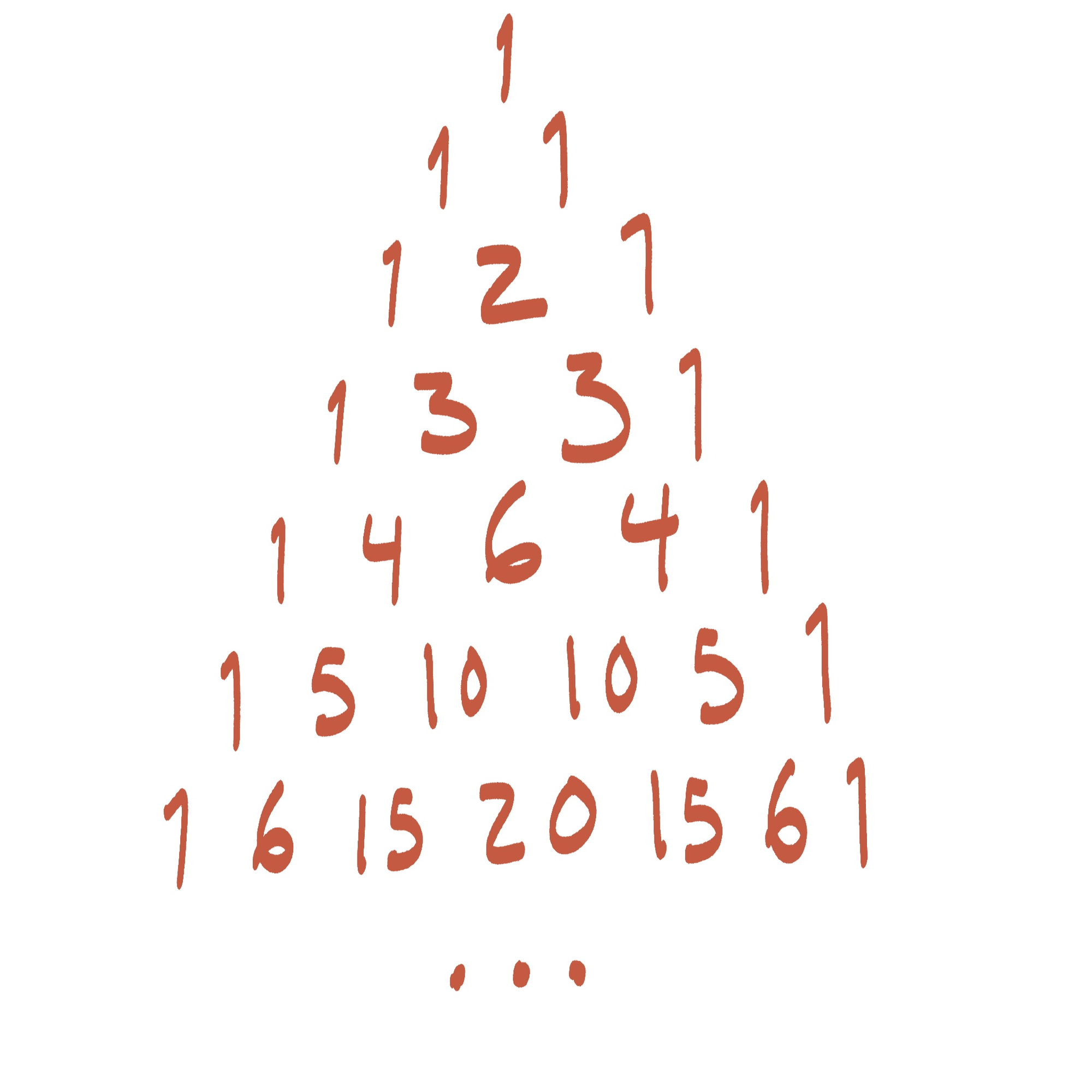
Finding patterns in this triangle is fun - from counting numbers, to looking at parity (even/odd-ness), to primes and other numbers. When we look for certain numbers, we can think of it as filtering or sieving.
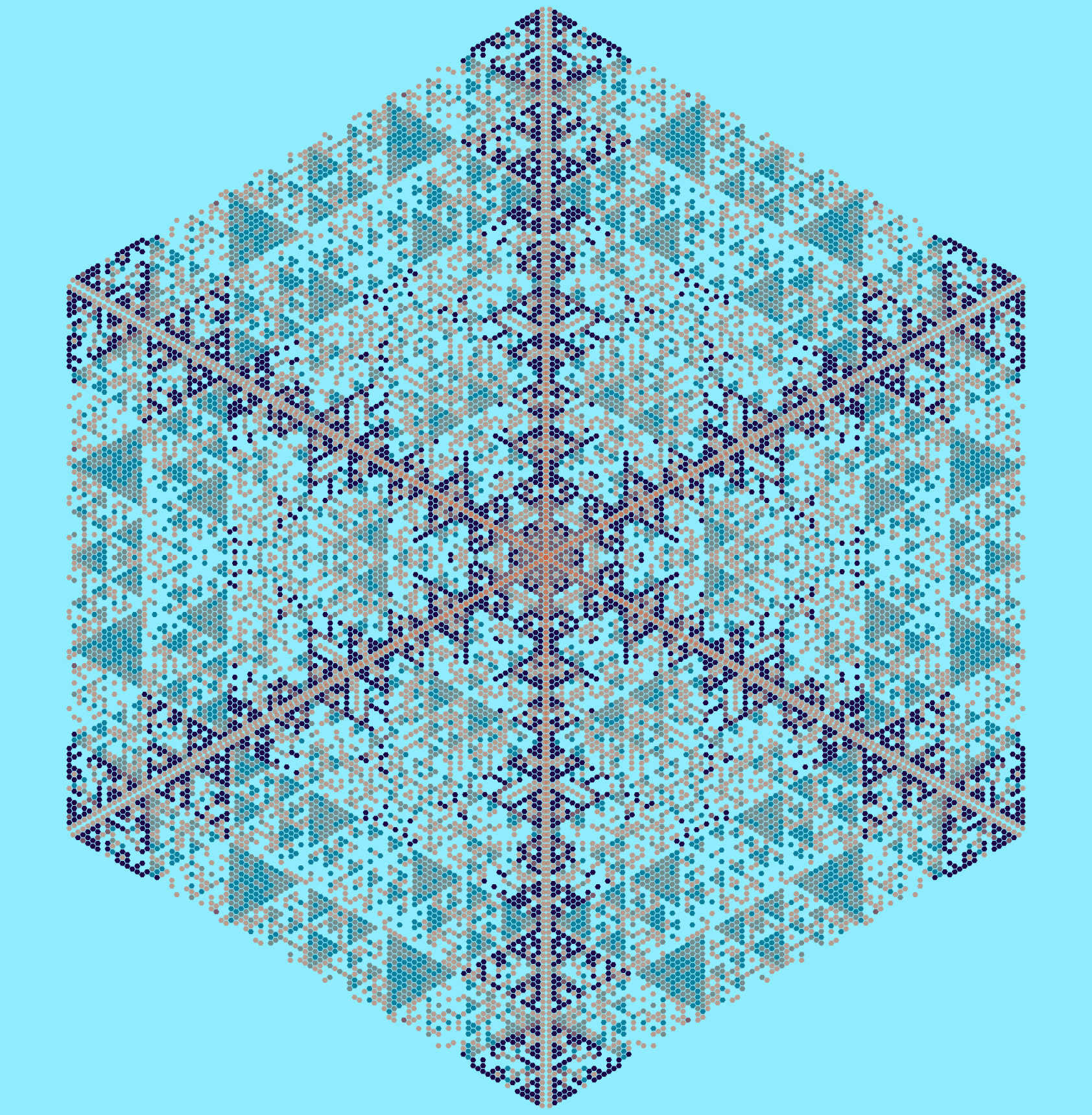
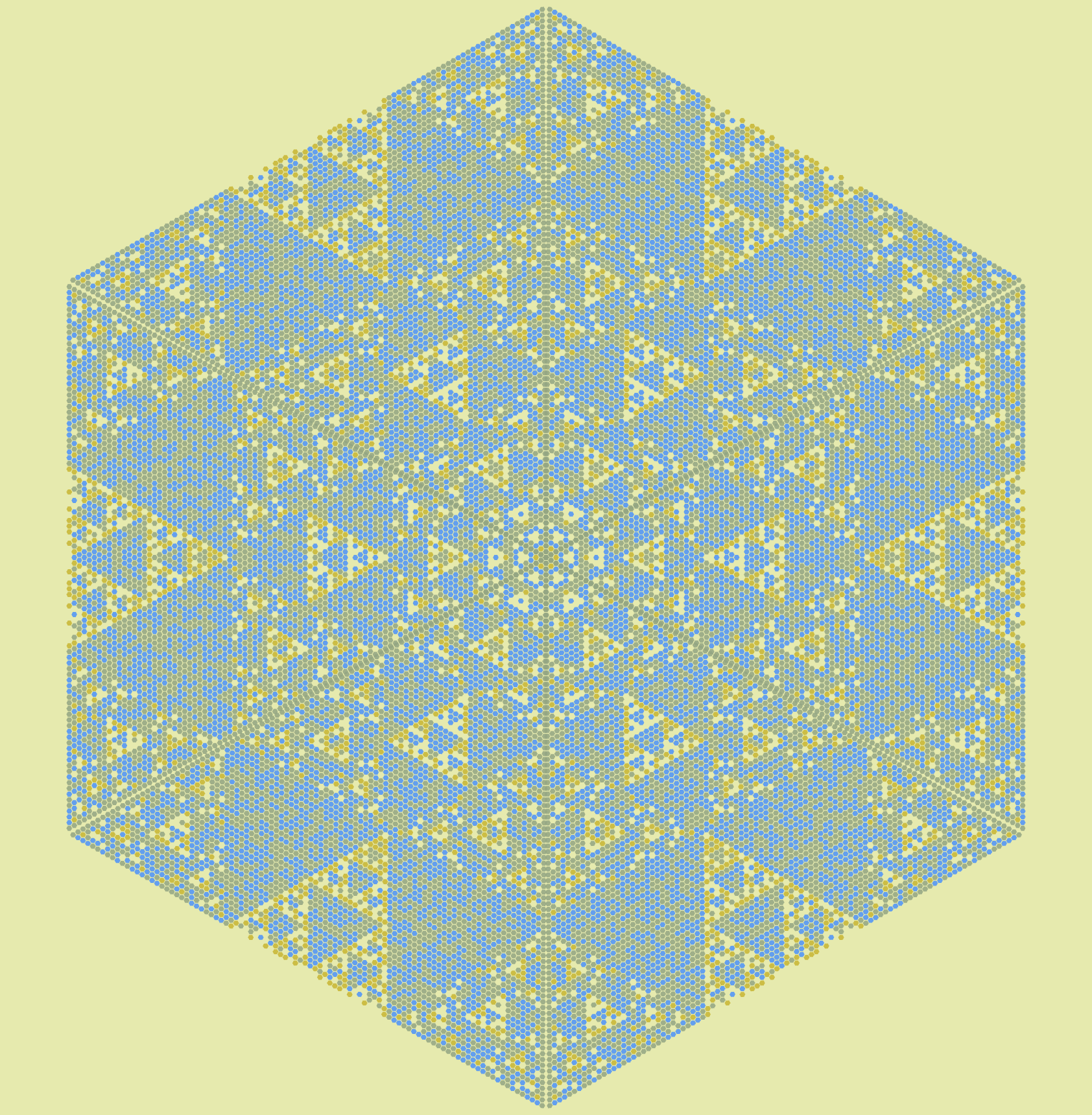
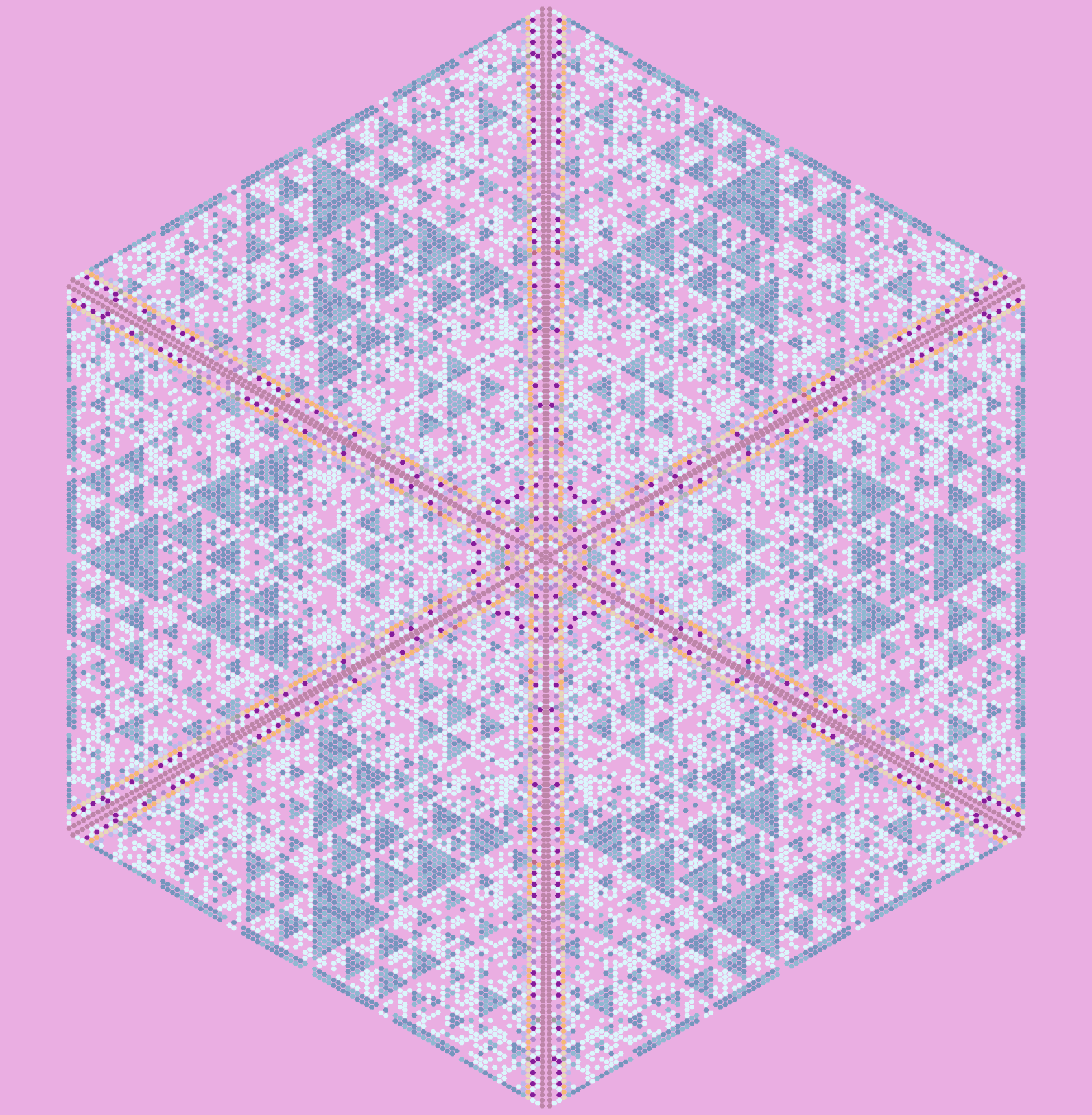
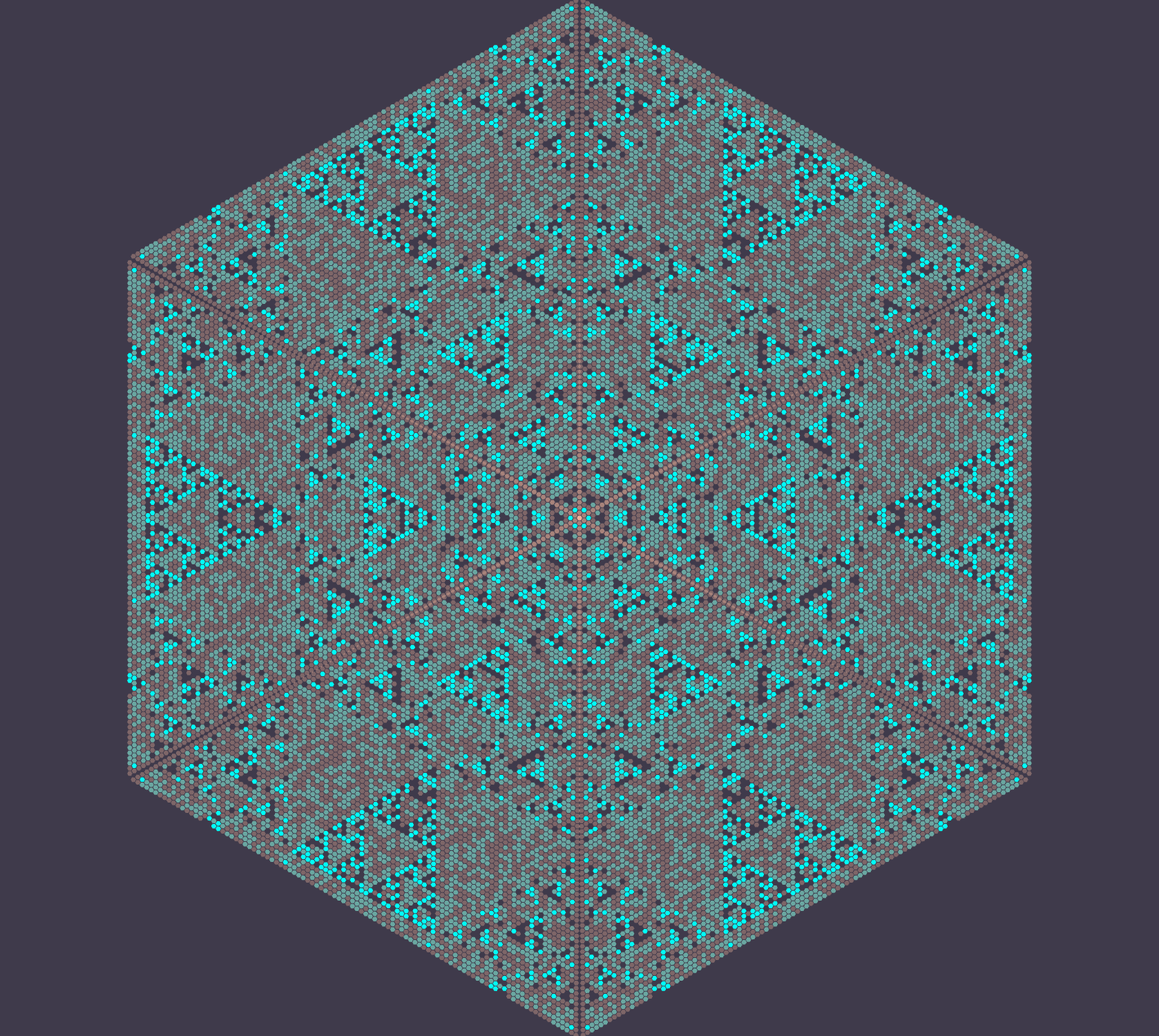
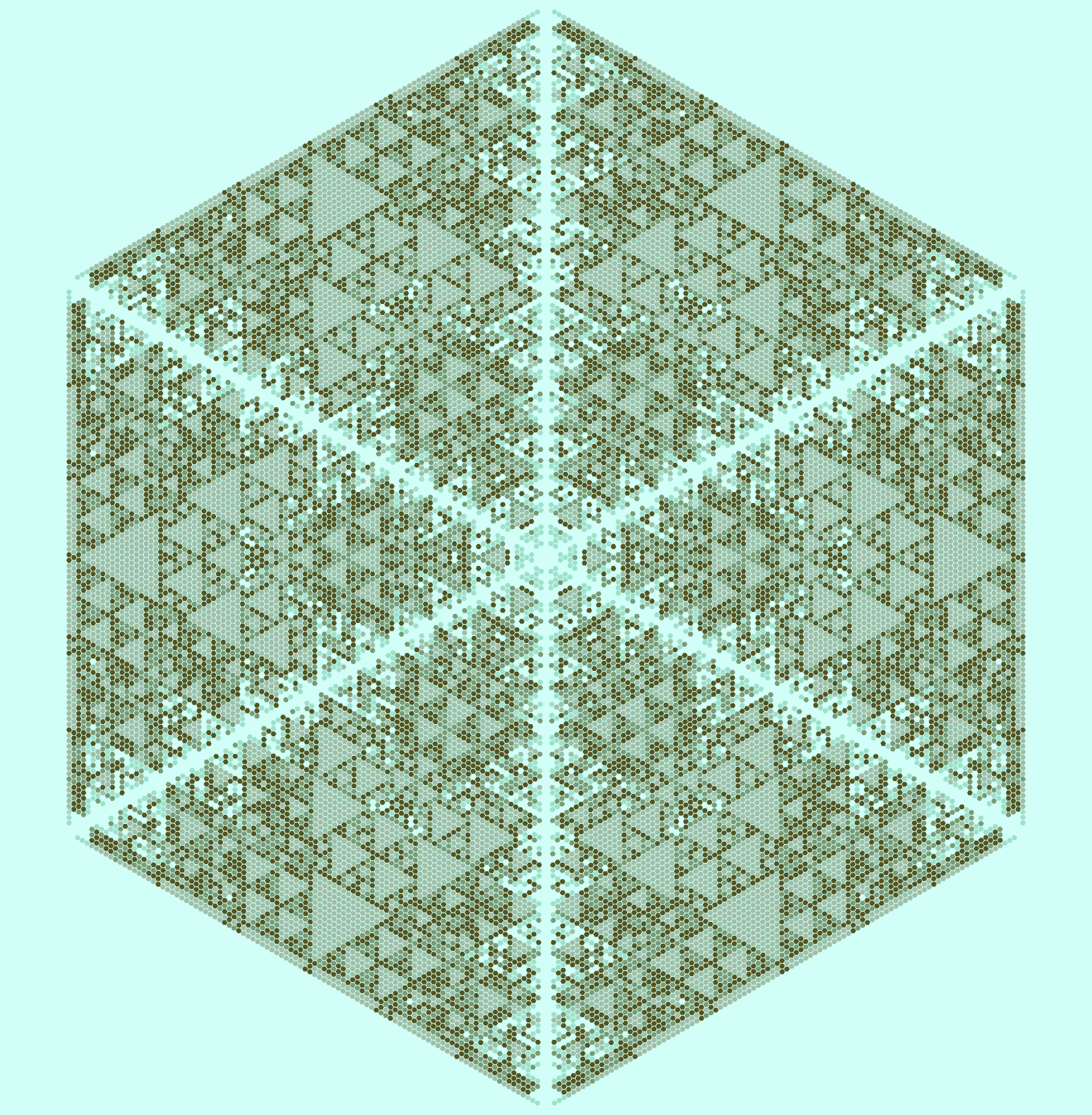
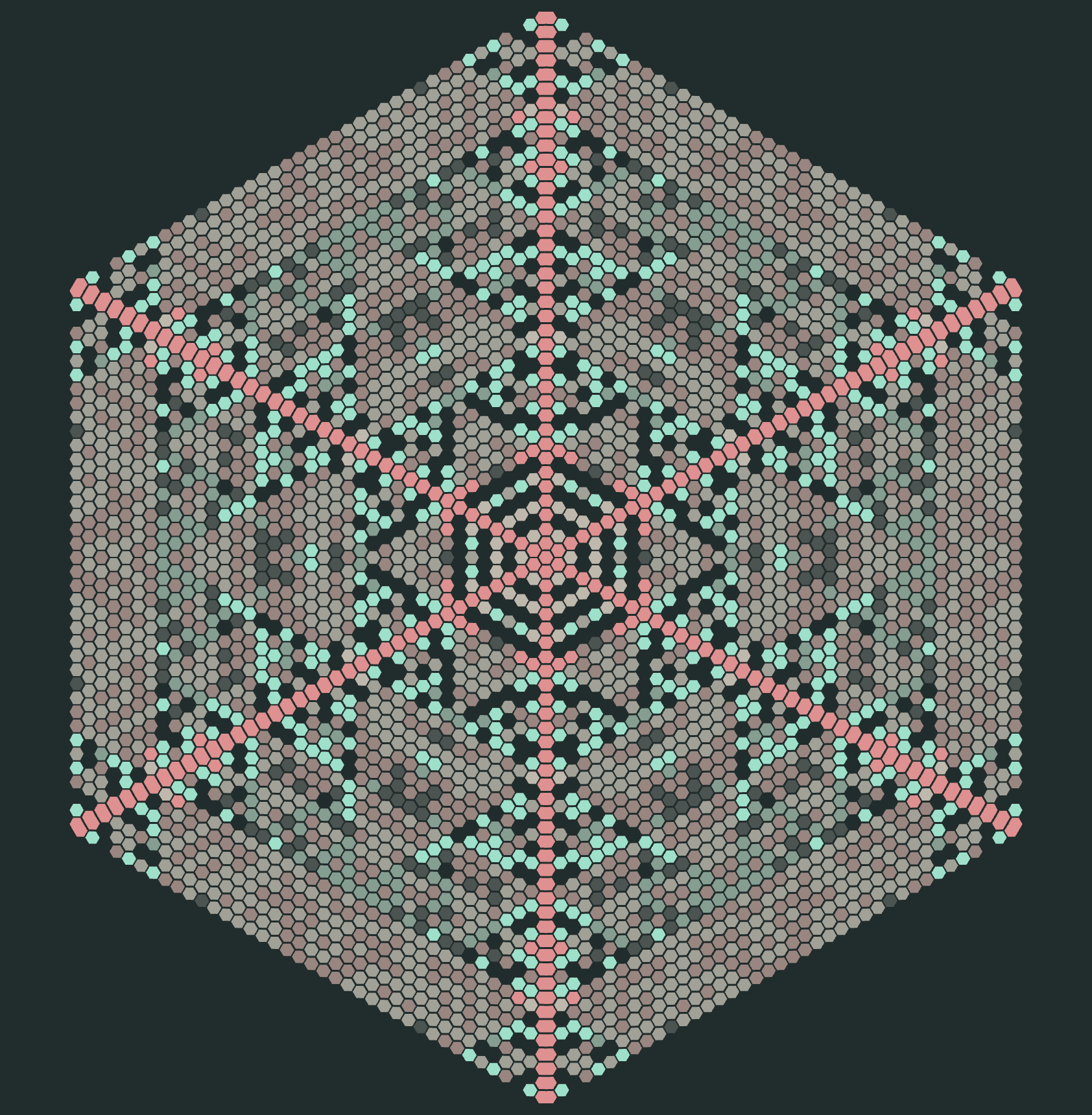
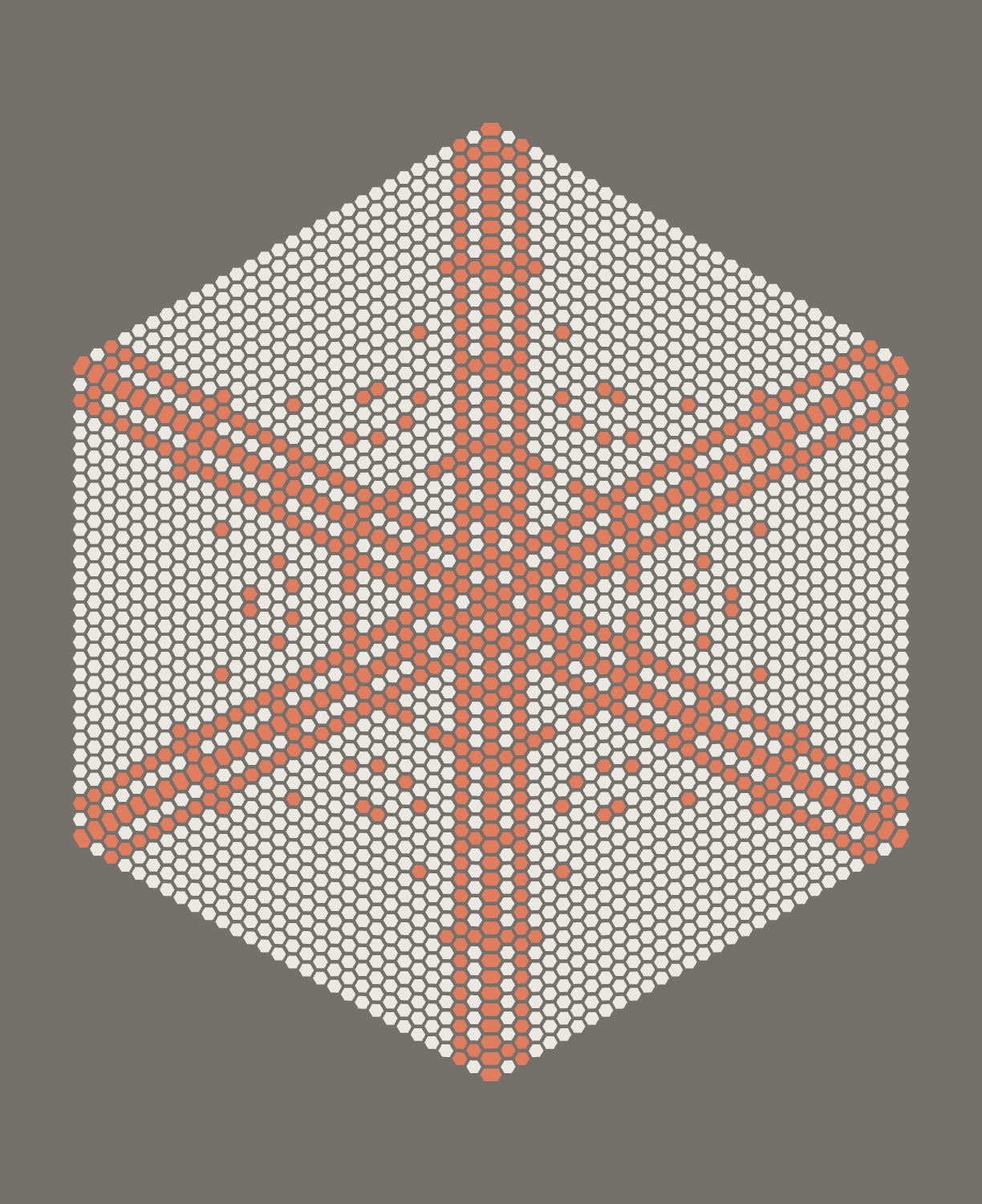
I played with different filters to overlay and then rotated copies of the triangles to make snowflakes. If you'd like to play, there is a very rough prototype here.
I made a few snowflakes using it:
Some notes for inquiry:
- Can you predict modular arithmetic patterns?
- Example: look at mod 10 and compare it to mod 2 and mod 5
- How do the odious-like (base-n parity) patterns compare to modular arithmetic?
- Where are primes scarce? why?
- Can you overlay filters to make equivalent filters?
- What patterns are interesting when zoomed in? zoomed out? both?
- Some numbers (such as Fibonacci numbers) were left out because they are less interesting at this scale. What are other numbers that might be like this?