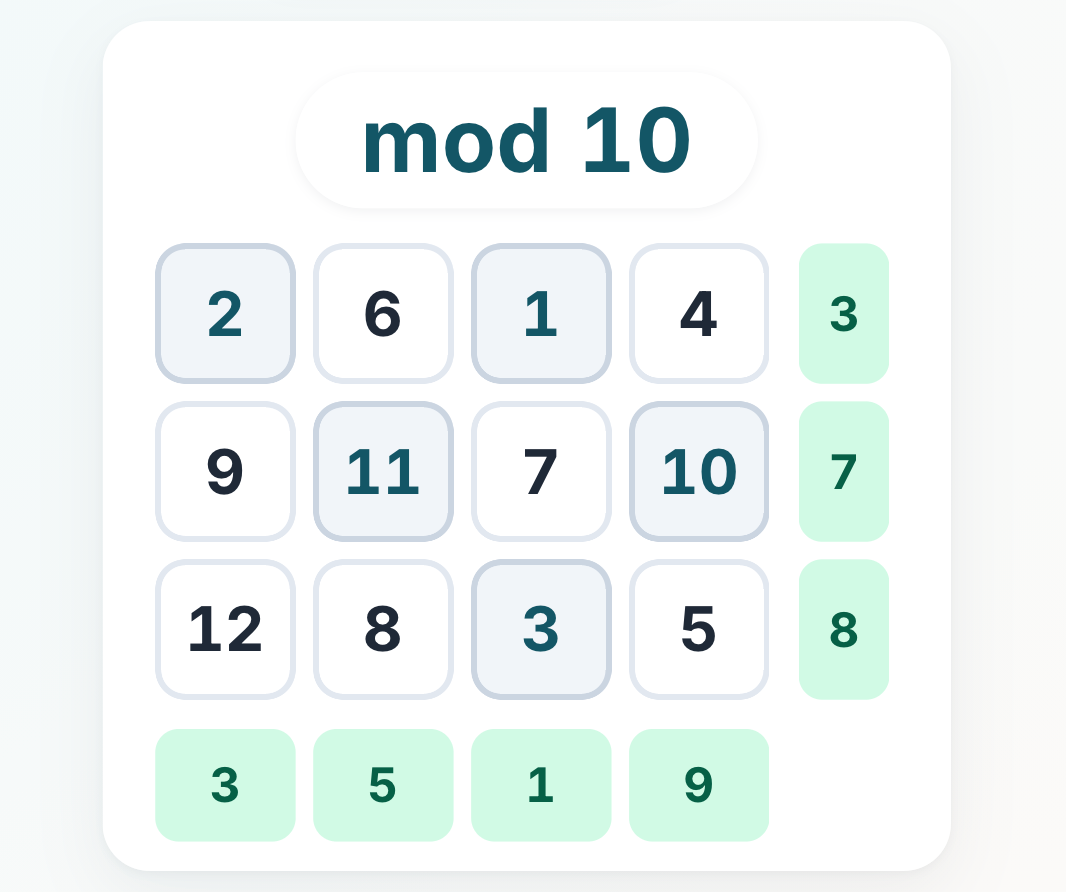
Moduloku

Math is wonderful, and there are so many different ways to play and experience it. I enjoy having conversations with other math lovers and sharing ideas, puzzles, pedagogy, and questions.
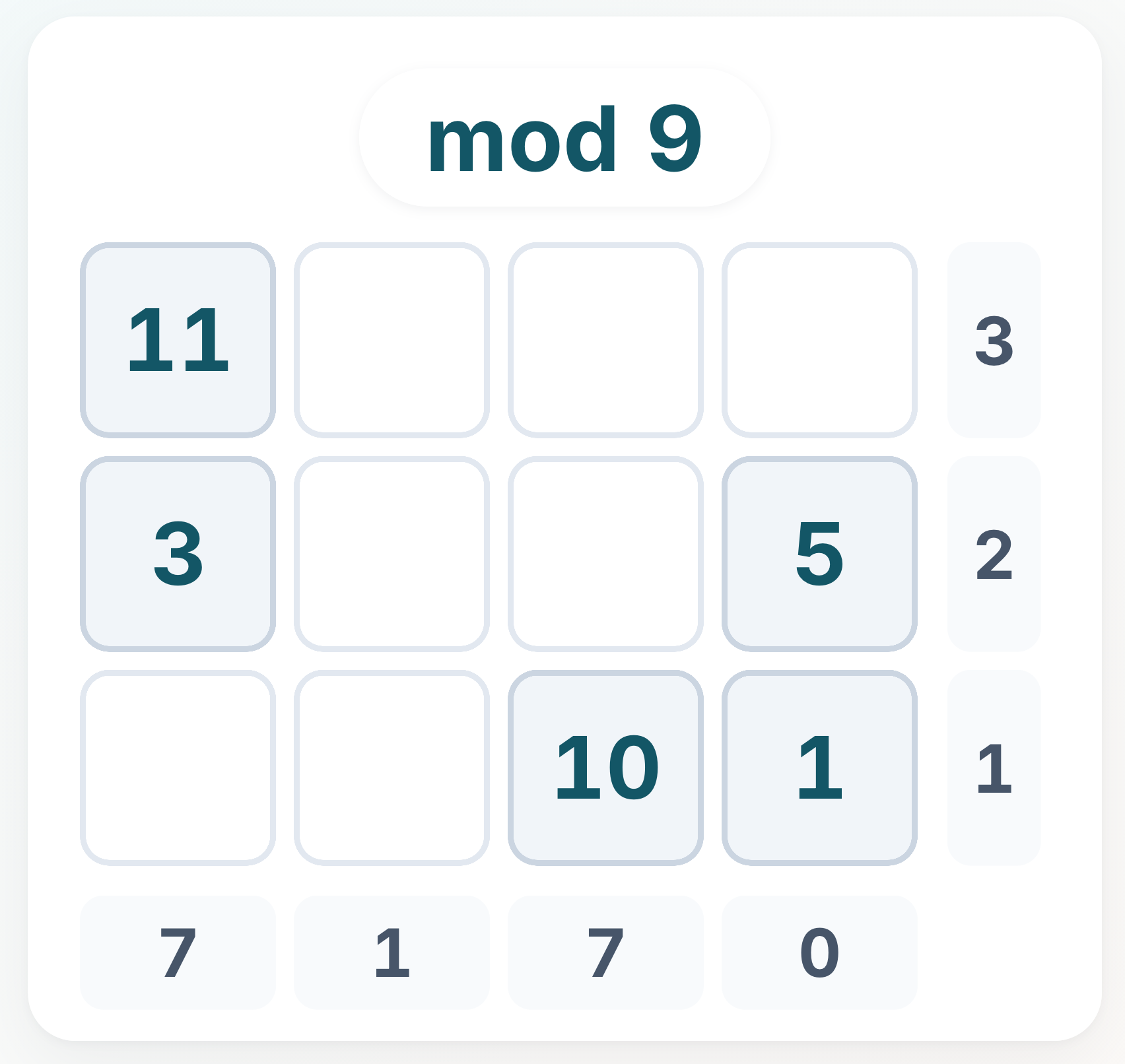
In one of these conversations with Dr. Maria at Natural Math, I learned about a book called Modultown by Drs. Sasha Fradkin and Allison Bishop, and the artist, Mark Gonyea. The project also has an adjacent puzzle book with a delightful puzzle called Moduloku.
I made a prototype of a simplified digital version while at the Recurse Center on my website Inquiries.Link.
I look forward to working on some of these in my math sessions with learners and playing with some of the variations in the book.
Spoiler:
Here are my thoughts as I solve one:
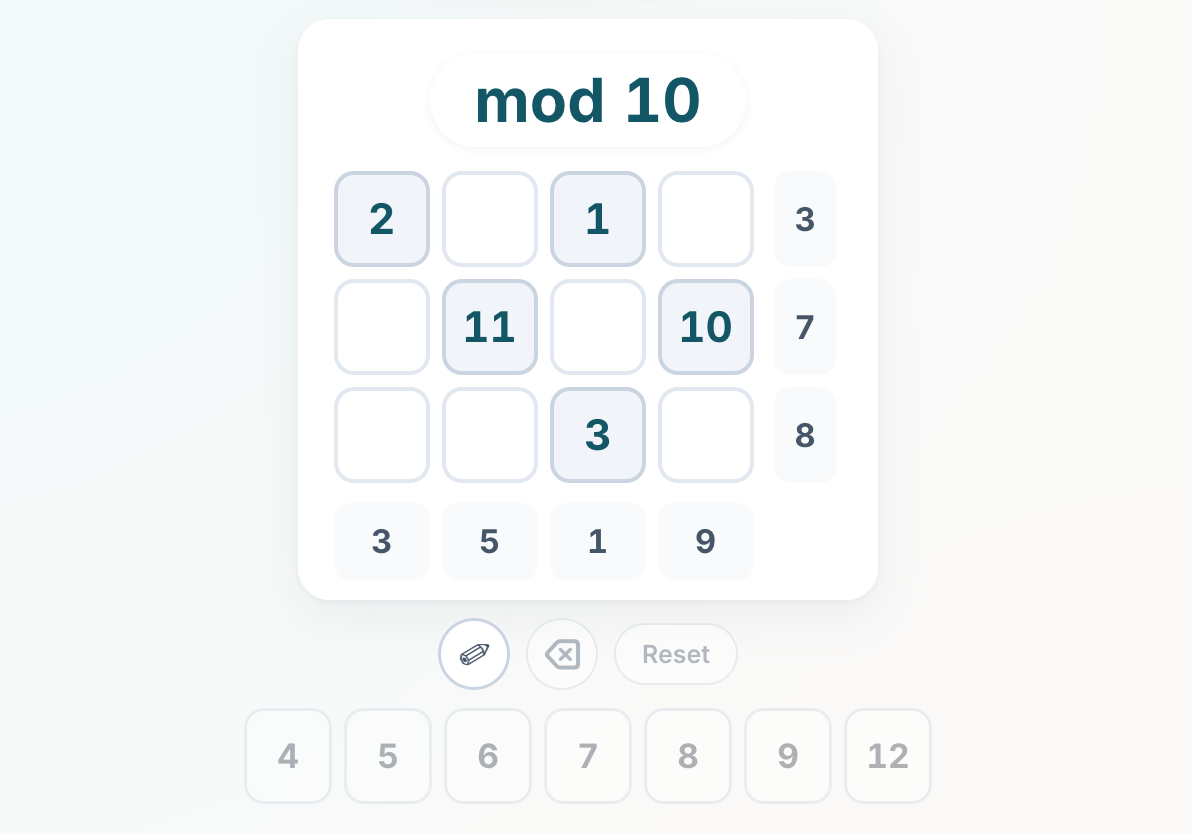
The first thing is to look for blanks I can check right away against the remainders. I see that the third column has one blank and the sum has a remainder of one when divided by 10. Of the numbers available, only 7 gives a remainder of 1.
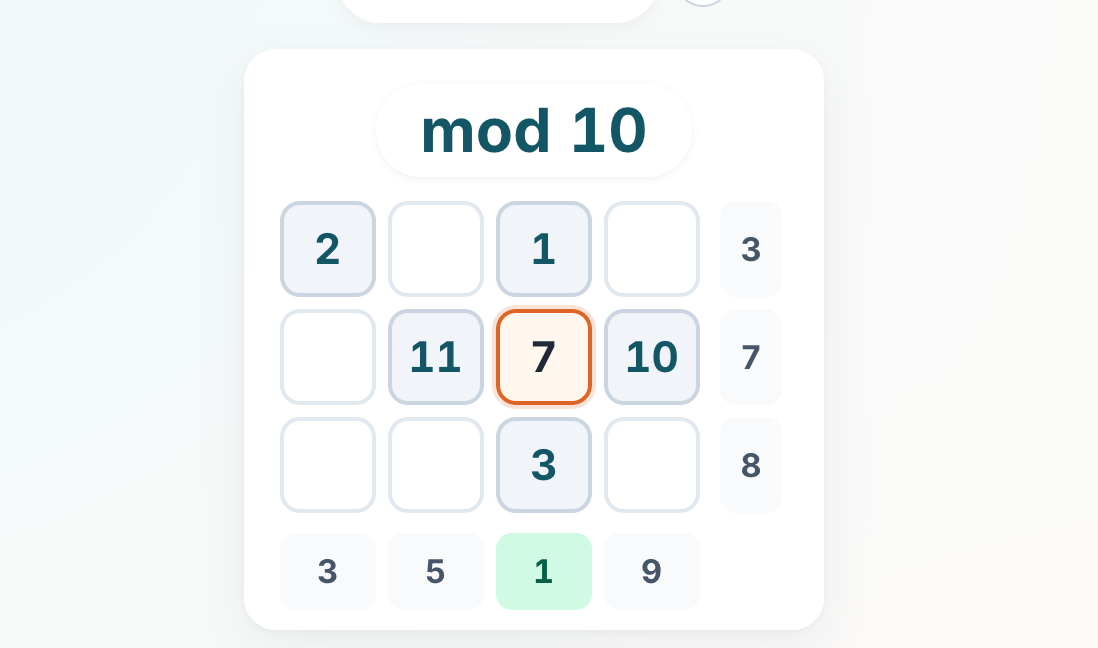
I can then use the same approach to find the numbers in the first column. First I find the 9, but then, the next one is a little tricky. I need a 2, but since that isn't available, I can use 12 to get the same remainder.
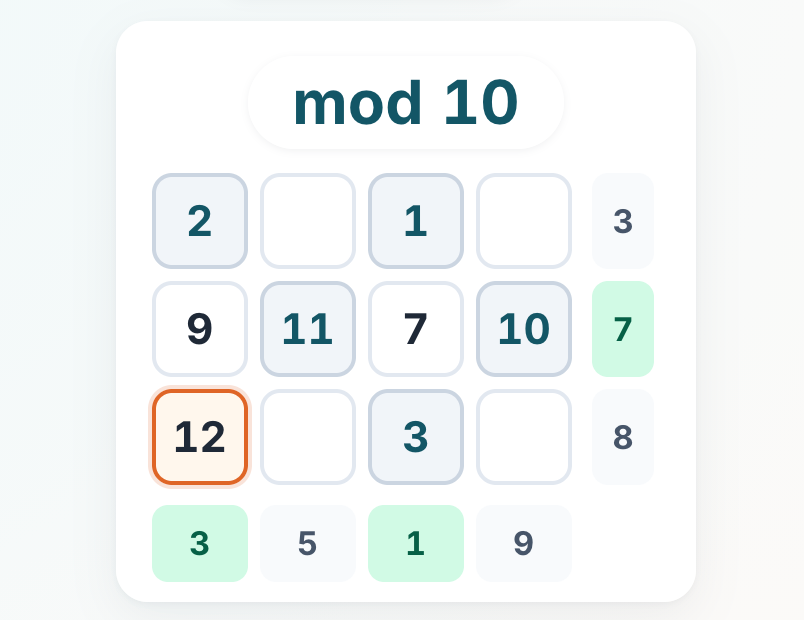
Now, the top row has a remainder of 3 and the sum is 3 with two blanks. That means that the sum of the two blanks must be divisible by 10. The only combination that works is 6 and 4. So, the last two blanks must be 5 and 8.
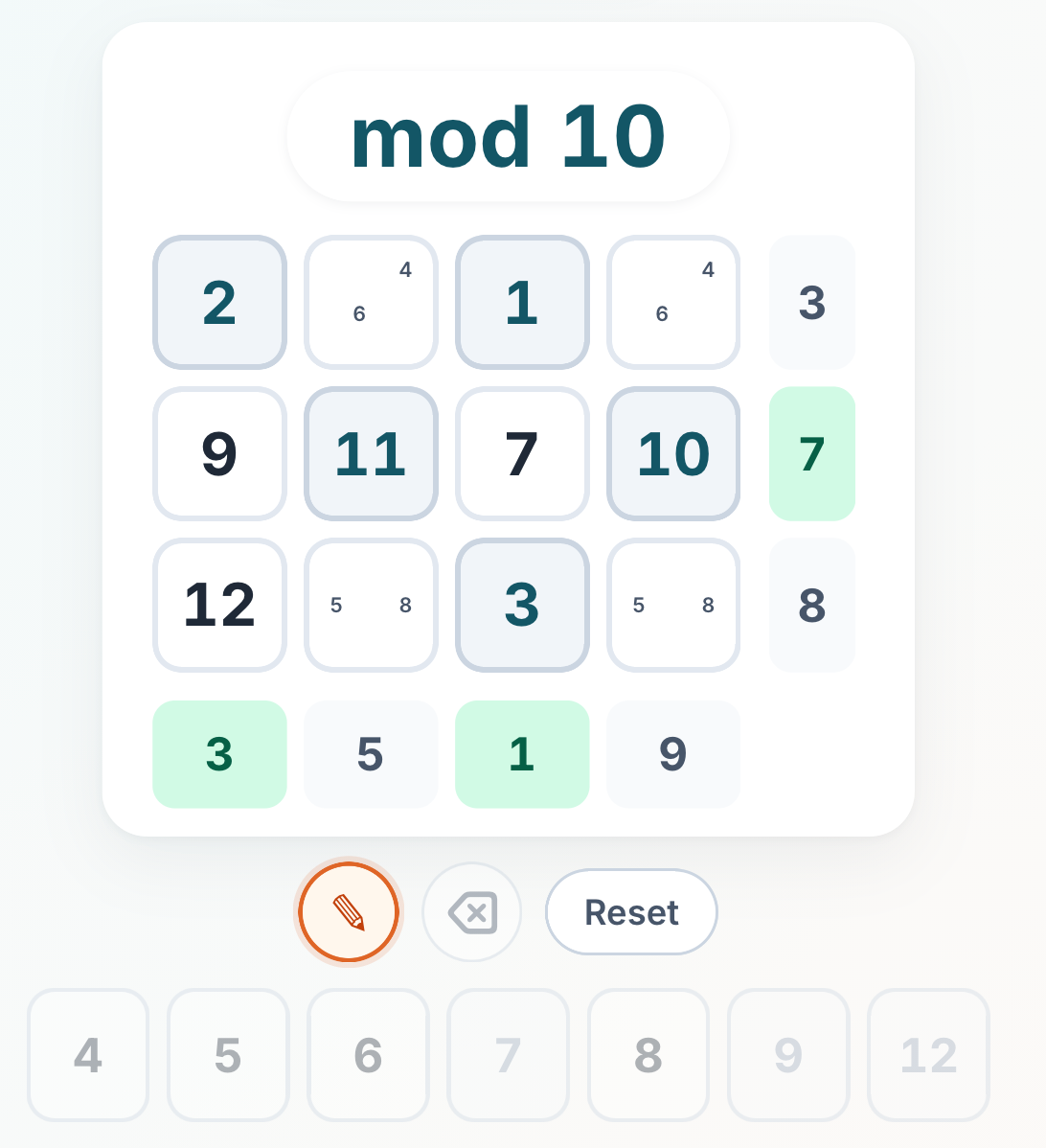
We can do the same for the columns. So, column 2 has a remainder of 5 and sum of 11. That means that we must sum the two blanks to a number that has a remainder of 4 when divided by 10. The only combination of 4,6 and 5,8 that works is 6 and 8, which sums to 14.
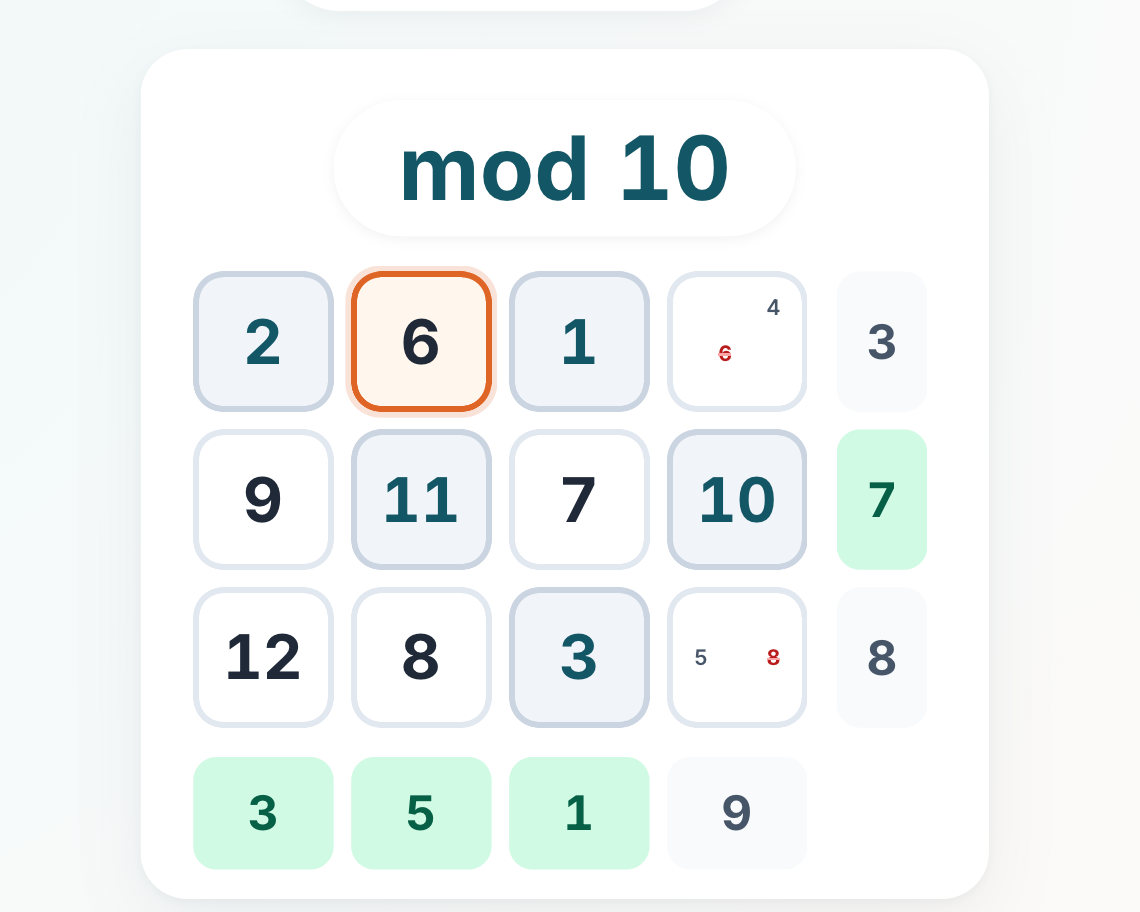
Which leaves only one possible value for each remaining blank – Solved!